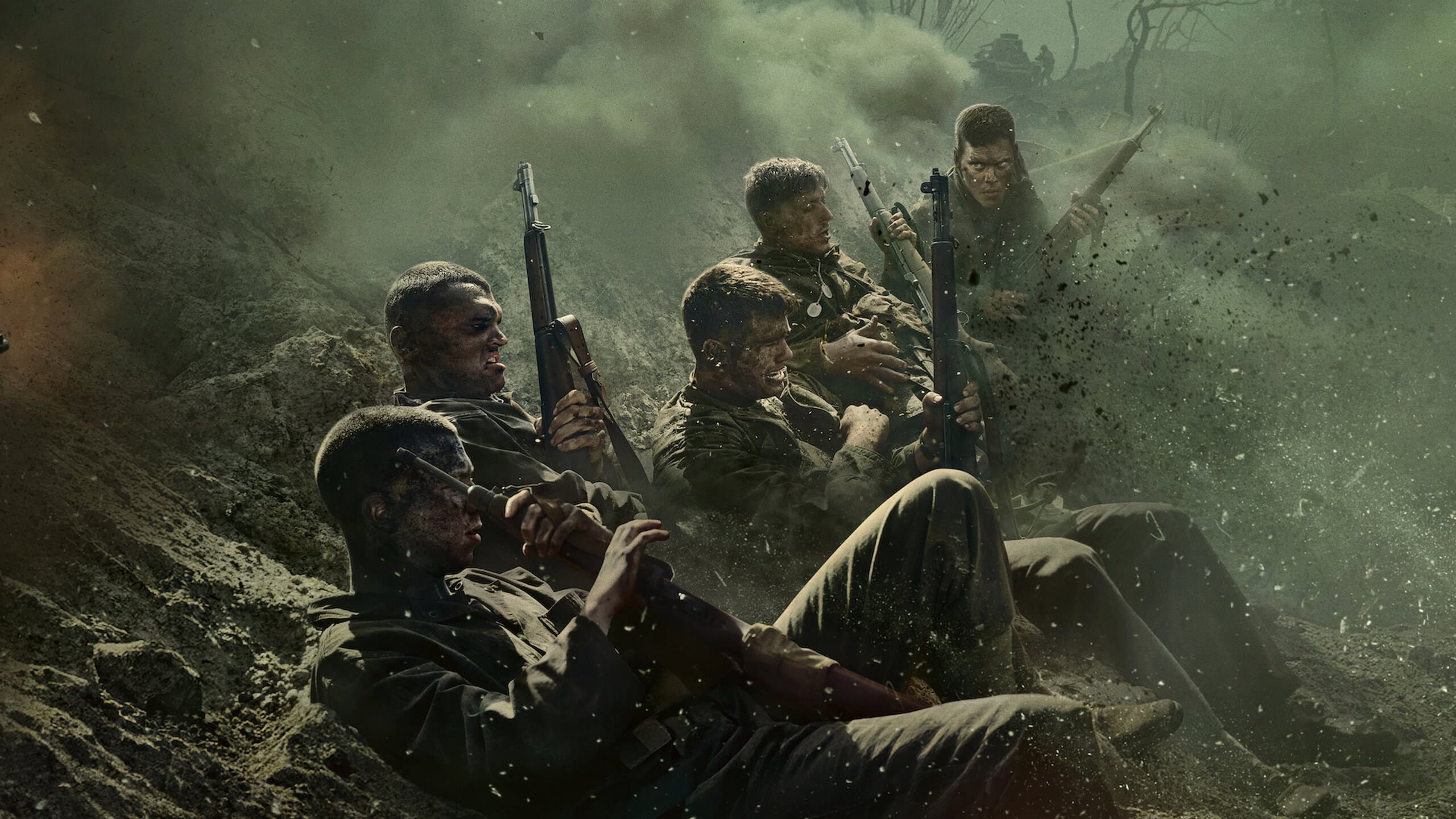
Peter Berg has never been a filmmaker who flinches. From the bone-rattling drills of "Friday Night Lights" to the grim survivalism of "Lone Survivor," he's built a career on putting men and women under pressure and watching what cracks. So the news that he's helmimg "The Mosquito Bowl," a World War II drama about college football stars trading their cleats for combat boots, feels less like a career left turn and more like the most Peter Berg movie Peter Berg has ever made. The film landed in theaters October 29, and it's been quietly building word of mouth ever since - currently sitting at a 7.2 on TMDb, the kind of solid, respectable number that suggests audiences are finding exactly what they came for.
The setup is deceptively simple. In the aftermath of Pearl Harbor, four college football standouts - played by Nicholas Galitzine, Bill Skarsgård, Ray Nicholson and Tom Francis - enlist in the US Marines. What follows is a story about brotherhood, the strange intimacy of men who share a huddle and then share a foxhole, and the brutal arithmetic of what war asks of the young and the gifted.
If that cast sounds like a Gen Z dream team, that's because it sort of is. Galitzine, fresh off a string of romantic leads that made him a household name in certain corners of the internet, steps into the role of John McLaughry. It's a notable pivot for an actor whose career has been built on charm and smolder - here he's asked to carry the weight of a man watching his future get rewritten by headline news. Bill Skarsgård, meanwhile, continues his fascinating post-Pennywise career arc as Bob Bauman, bringing that same unsettling intensity to a role that's decidedly more human. Ray Nicholson has been steadily stacking credits and looks primed for a breakout as Tony Butkovich, while Tom Francis rounds out the quartet as Dave Schreiner. Brent Comer, Dominic Bogart and Jack Ingram fill out the ensemble, and Ella Newton brings a welcome presence as Jane, a reminder that the home front had its own battles.
At 129 minutes, "The Mosquito Bowl" gives itself room to breathe. Berg has always been good at texture - the sweat, the dirt, the way a locker room smells before a big game - and transplanting that sensibility to a Marine training camp is a natural fit. The football sequences reportedly crackle with the same kinetic energy as his gridiron classic, but the film's real engine is the slow dawning realization among these young men that the game they love might be the last thing they ever do together.
The title itself carries a grim poetry. The Mosquito Bowl was the actual nickname for a legendary wartime football game played by Marines in the Pacific - a moment of normalcy and competition carved out of the chaos of war. Berg's film uses that touchstone to explore the collision between athletic glory and mortal stakes. It's the kind of juxtaposition that Hollywood loves when it's done right: boys becoming men, games becoming metaphors, and the terrible cost that comes with both.
Genre-wise, this is a war drama in the classic mold, but the casting suggests Berg is aiming for something that resonates with a younger audience than your grandfather's war movie. There's a reason Galitzine and Skarsgård are front and center. This is a film about men in their early twenties, played by actors who speak directly to that demographic, and early reaction suggests the gamble is paying off.
The film's October 29 release placed it squarely in the fall prestige corridor, the season when studios traditionally trot out their awards hopefuls. Whether "The Mosquito Bowl" ultimately plays as a contender or simply as a well-crafted, emotionally resonant crowd-pleaser remains to be seen - and that's a conversation for a different article. What's clear is that Berg has assembled a cast of rising stars and put them through something that looks genuinely demanding, and audiences seem to be responding to the sincerity of the endeavor.
War films live and die on whether we care about the people in the uniforms. On that front, "The Mosquito Bowl" appears to be swinging for the fences. Four football stars. A world at war. A game that meant everything and nothing at all. Berg's latest is in theaters now, and if you've ever wondered what happens when the Friday night lights go dark and the real world comes calling, this one's for you.