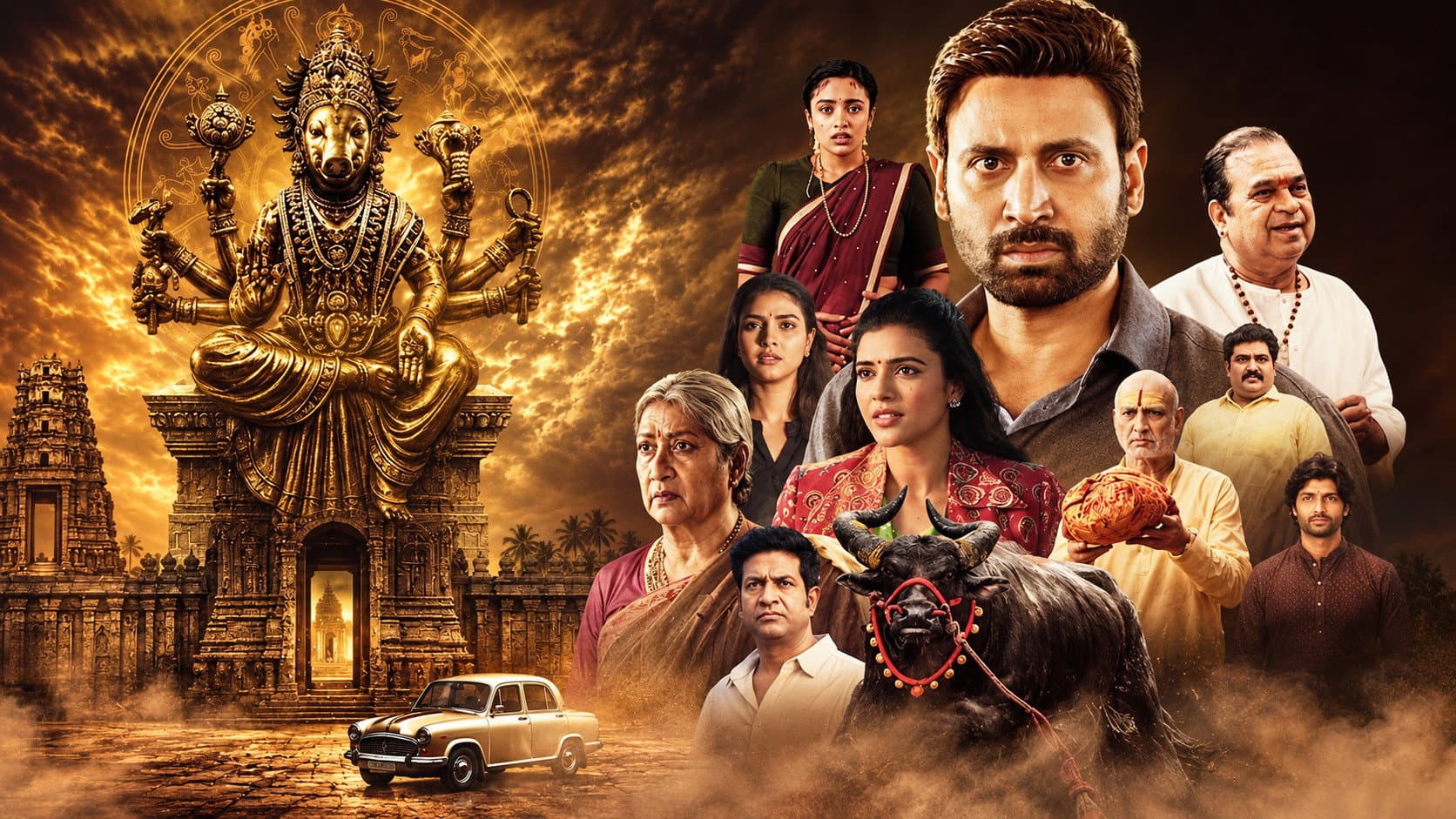
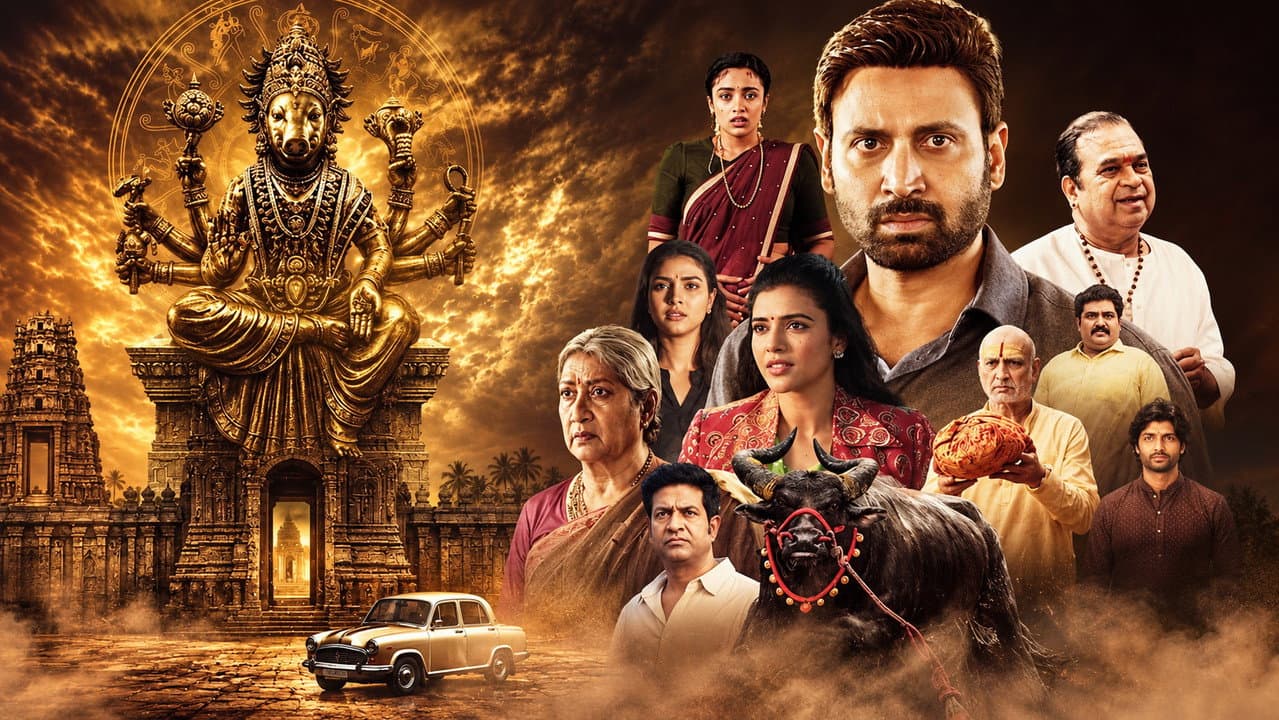
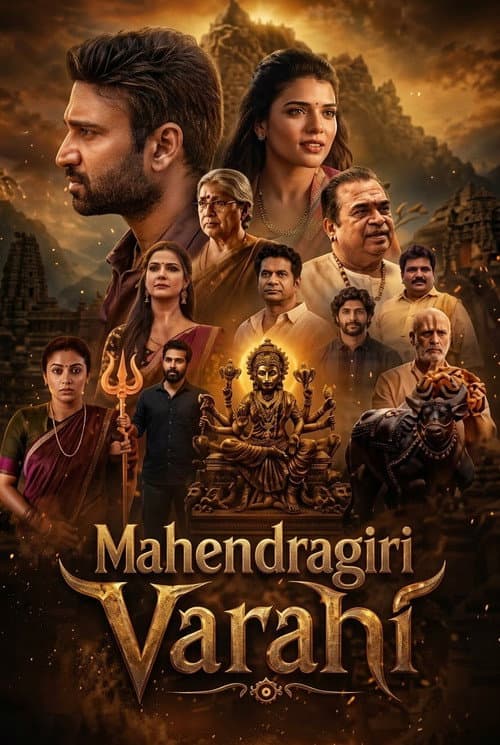
Here's the thing - Mahendragiri Varahi has all the ingredients of a classic. A compelling protagonist, a rich mythological backdrop, and a director in Santosh Jagarlapudi who clearly has a vision. And for the first two acts, it works beautifully. The cinematography captures the eerie stillness of the Mahendragiri temple grounds with a reverence that borders on unsettling. Every flickering lamp and shadow-draped corridor feels like it's hiding something, and the sound design - all low rumbles and distant chants - does a lot of heavy lifting.
Sumanth is the beating heart of this thing. He plays Siddharth with a quiet arrogance that slowly cracks into genuine fear and awe, and his arc feels earned rather than forced. Meenakshi Goswami and Aishwarya Rajesh bring warmth and depth to their roles, while Malvika Nair and veteran Manju Bhargavi add layers to the film's spiritual fabric. And yes, Brahmanandam shows up, and while his presence might feel jarring in such a dark narrative, he delivers a surprisingly effective dramatic turn - a reminder that comedy legends can break your heart when given the chance.
Where the film loses its footing is in the third act. Without spoiling anything, the explanation for the supernatural events lands somewhere between "profound" and "overcomplicated," leaning more toward the latter. The script, which was so confident in its ambiguity early on, suddenly feels the need to spell everything out - and the mystery loses some of its bite as a result. Also, at times the pacing drags, particularly in the middle stretch where Siddharth's investigation feels repetitive.
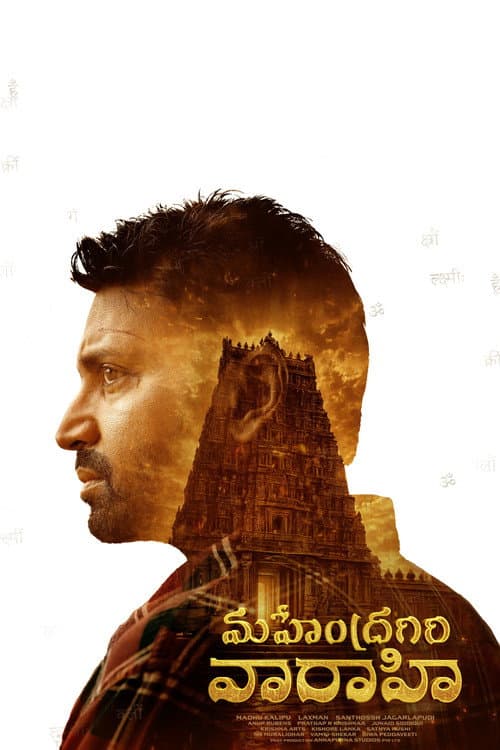
But when Mahendragiri Varahi works, it really works. There are images here that will stick with you - a lone figure silhouetted against the temple gate, the slow reveal of something that shouldn't exist. It's a film that respects its audience's intelligence for the most part, even if it can't resist overexplaining in the final stretch.