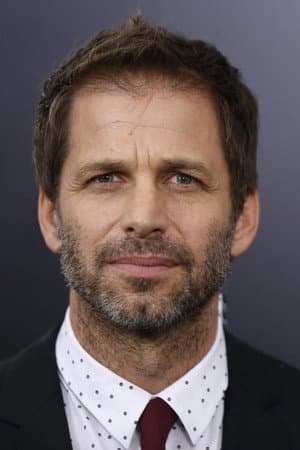
Zack Snyder has spent the better part of two decades building a reputation as one of Hollywood's most maximalist filmmakers - a director who paints on the biggest canvas available, fills it with digital armies and mythic heroes, and rarely lets a camera sit still when it could be hurtling toward something at 100 miles an hour. So consider it a genuine plot twist that, according to a new exclusive report, Snyder's next move is stripping all of that away.
The director is going indie, and he's doing it in the most literal sense. No green screen. No video village. No slow-motion shots. For a filmmaker whose visual signature has become synonymous with speed-ramped action and computer-generated worlds, that's not a stylistic tweak - that's a full teardown of the toolkit he's spent his career perfecting.
A Deliberate Departure From the Snyder Playbook
For anyone who's followed Snyder's filmography, the three things he's reportedly giving up read like a checklist of everything audiences associate with his name. The green screen has been his gateway to places no location scout could ever find. Video village - that cluster of monitors where directors, producers, and a small army of crew gather to watch each take - has been standard operating procedure on his sets for years. And the slow-motion shot? That's practically a Snyder trademark, the dramatic pause that turns a punch, a leap, or a stare into something operatic.
Walking away from all three at once suggests a director who isn't just trying a new genre or a new collaborator. He's trying a new way of working entirely. The indie route typically means smaller crews, tighter budgets, real locations, and a reliance on whatever's physically in front of the camera rather than whatever can be rendered afterward. For Snyder, that's the equivalent of a chef who's spent his career in a high-tech molecular gastronomy lab deciding to cook over an open fire.
Why This Might Be the Most Interesting Thing Snyder Has Done in Years
Here's the thing about a filmmaker with as pronounced a style as Snyder's: the style eventually starts making the decisions for you. When every scene gets the slow-motion treatment and every backdrop is digital, the tools can become a cage. Audiences know what a Zack Snyder movie looks like before they buy the ticket, and that predictability cuts both ways - it built him a fiercely loyal fanbase, but it also made his work easy to parody and easy to dismiss.
Stripping away the green screen and the slow-mo doesn't just change how a Snyder film looks. It changes what's possible within it. Without a digital safety net, the performances have to carry more weight. Without video village, the director has to be closer to the action - literally in the middle of it, watching with his own eyes instead of through a monitor. Without the signature slow-motion flourish, action has to be staged, timed, and sold in real time, which is a much less forgiving discipline.
Whether this is a permanent reinvention or a one-time experiment is anyone's guess. Directors with strong visual identities sometimes take a detour into stripped-down territory only to return to their comfort zone with renewed energy - and sometimes they never go back. Either way, the announcement alone is more intriguing than most directors' entire release slates.
The Bigger Picture
There's also something refreshingly old-school about the move. In an era when even mid-budget dramas are shot against LED volumes and finished in post, choosing to go without green screen at all feels almost rebellious. Add in the absence of video village - that modern fixture of filmmaking that keeps the director tethered to a monitor - and Snyder seems to be chasing a more immediate, hands-on kind of filmmaking. The kind where you're not sure what you got until you're standing right there watching it happen.
It's worth noting what this report doesn't tell us. There's no word yet on what the project actually is, who's in it, or when audiences might see it. And that's fine. Sometimes the most compelling movie news isn't a casting announcement or a release date - it's a veteran director deciding to throw out the rulebook he wrote himself.
Snyder has spent years being one of the most imitated and debated filmmakers of his generation. Now he's apparently betting that the most interesting thing he can do is become unpredictable again. No green screen. No video village. No slow motion. Just a director, a camera, and whatever he finds in front of him.
For a guy whose career has been defined by control over every pixel, that's a bold gamble. It's also, potentially, the most exciting thing he's done in years - and movie fans should probably be paying attention.
Source: hollywoodreporter.com