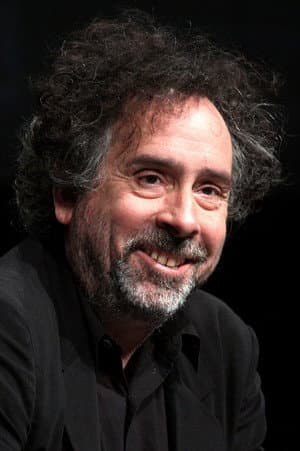
Thirty-two years ago today, the movie business learned a lesson it keeps having to relearn: the guy everyone has written off is often the same guy about to make something unforgettable. In 1994, Tim Burton - the filmmaker Hollywood had once been only too happy to label its worst director - delivered a film that critics and audiences embraced as one of his very best, a career pivot so sharp it still gets cited whenever a director is counted out too early.
The label itself is the stuff of industry legend. Burton's early feature work at Disney famously didn't fit the studio's house style, and his first big-screen outing as a director got him fired and, by his own telling over the years, stamped with a dismissive reputation around town. "Hollywood's worst director" wasn't a review so much as a running joke inside the gates - the kind of backhanded title that can quietly end a career before it starts.
From Studio Misfit to Pop Auteur
What happened next is the part that made Burton's story so satisfying. Instead of sanding off his edges to win approval, he doubled down on them. His sensibility - gothic, handmade, a little melancholy, deeply funny in a way that doesn't wink at you - turned out to be exactly what mainstream audiences had been missing. By the early 1990s, the same tastemakers who'd dismissed him were describing him as one of the most distinctive visual stylists working in American movies, a director whose name above a title meant something.
That's the arc the "32 years ago today" anniversary is really about. It's not just one movie's birthday. It's the moment the industry's least-favored son became the guy studios wanted in the room - proof that a bad first impression in this town is not a life sentence.
Why the Reversal Still Matters
Anniversaries like this one tend to get framed as nostalgia. But there's a sharper point underneath. Hollywood has always had a shaky record with filmmakers who don't arrive pre-packaged. The system rewards the safe bet and punishes the strange one, at least at first. Burton is the rare case where the strange one won, and won on his own terms, without staging a public reinvention tour to do it.
There's also a lesson in how reputations actually get built. Nobody in the trades hands out the title of "worst director" permanently. It's provisional, and it gets revoked the moment the work is undeniable. Burton didn't argue his way out of that reputation with interviews or damage control. He simply kept making movies that looked like nothing else, until the earlier dismissal started to read as a story about the people doing the dismissing.
It's worth remembering, too, that the comeback wasn't a single lucky swing. The years around that turning point saw Burton move from cult curiosity to full-blown pop-culture force, the kind of director whose visual language spilled out of the multiplex and onto T-shirts, posters, and Halloween costumes. That kind of reach doesn't happen because a studio decides to promote someone. It happens when an audience decides it wants more of whatever this is.
The Bigger Takeaway
If there's a reason this particular anniversary keeps resurfacing, it's that it doubles as an argument. Every few years, some young director gets publicly written off, and inevitably someone brings up Burton as the counterexample. The story works because it's clean: dismissed early, vindicated later, no asterisk required.
It also says something about how quickly the industry forgets its own verdicts. The gatekeepers who once kept Burton at arm's length later lined up to work with him, and nobody seemed embarrassed about the switch. That's not hypocrisy exactly - it's just how Hollywood operates. Taste is negotiable. The one thing that isn't negotiable is the work itself.
So here we are, 32 years on, marking a date that matters less for the calendar and more for the reminder. Being called the worst is not the same as being the worst. Sometimes it just means you showed up early with something the room wasn't ready for.
Burton obviously didn't stay "Hollywood's worst director" for long. But the fact that the title ever stuck to him - and what he did with the years that followed - remains one of the more satisfying reversals in modern movie history. Not bad for a guy the town once couldn't wait to be rid of.
Source: Men's Journal