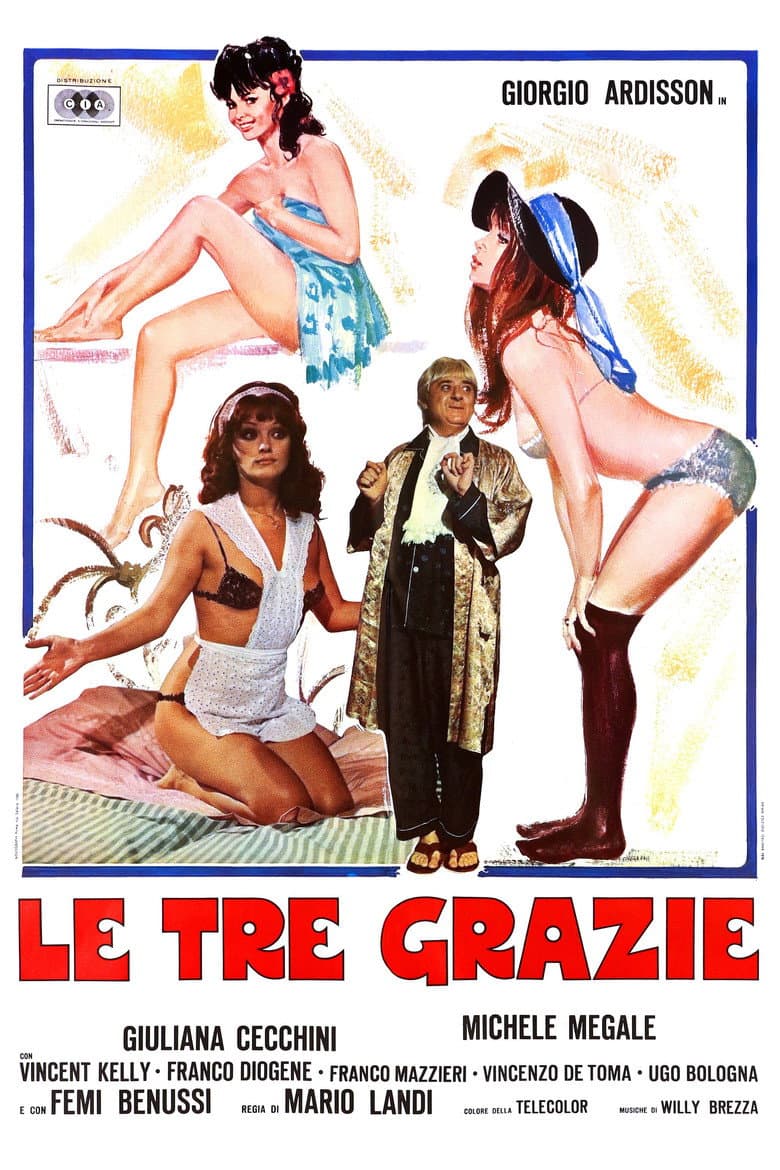
Italian exploitation cinema has a way of turning the most mundane settings into stages for absolute chaos, and the newly surfaced trailer for The Three Graces proves that 1979 was no exception. For anyone who thought modern mall security had it rough, this restored peek into Mario Landi’s forgotten gem shows a world where retail therapy takes a very literal - and very revealing - turn.
The plot, as gloriously bonkers as the era demands, follows a well-endowed woman who strolls through shopping centers entirely in the nude. Her mission isn’t just to cause a stir or get banned from every department store in Italy; it’s a calculated distraction. While every pair of eyes in the mall locks onto her, her accomplice sweeps in to lift small items from unattended stalls and purses. It’s a heist strategy that requires either zero shame or a very specific kind of genius, and honestly, it’s hard not to respect the hustle.
Landi, a director known for dipping into horror with titles like The Kinky Coaches and the Pussy Posse and later the infamous The Pleasure Shop, clearly had a knack for blending sleaze with sly comedy. Here, he trades the cobwebs for fluorescent lighting, crafting a crime caper that feels like a fever dream dreamed by someone watching too many late-night ads for girdles. The trailer, which has begun circulating among cult film circles, shows off the film’s defiantly low-brow charm: wide-eyed shoppers freezing mid-step, cashiers dropping their jaws, and the kind of chaos that only a fully unclothed woman pushing a shopping cart can generate.
The cast is a who’s-who of Italian B-movie royalty, though it’s fair to say most of them are better known for their physiques than their thespian range. George Ardisson, a rugged presence in dozens of spaghetti westerns and poliziotteschi, plays the accomplice with the sort of scruffy confidence that suggests he’s done this before - just hopefully with more clothes involved. Femi Benussi, a beloved scream queen and genre fixture, adds her unmistakable energy to the mix, while Michelle Megale and Loredana Piazza round out the female leads. Enzo Fisichella, Franco Diogene, and Franca Mantelli fill out the roster, giving the whole affair the feel of a troupe that would follow Landi anywhere, even into a shopping center with a fully nude woman.
What’s striking about the trailer is its tone. There’s no attempt to play this as artful or even particularly slick. Instead, it leans hard into the absurdity, with broad comedic beats and a pacing that screams “fast-forward through the boring parts.” The runtime clocks in at 95 minutes, which suggests plenty of padding - likely featuring extended shots of shoppers gawking, maybe a car chase or two, and certainly enough lingering close-ups to justify the film’s place in the annals of European exploitation. It was originally released in Italy on September 21, 1979, under the industry banner of Hollywood, which in this context is more of a state of mind than a geographic fact.
Now, a quick word on the film’s current reputation: TMDb gives it a hard 0 out of 10, a score that probably reflects a lack of votes more than a universal critical panning. But zero ratings rarely stop hardcore genre fans from digging into obscurity, and The Three Graces has all the markings of a lost oddity just begging for rediscovery. The title itself is a cheeky wink at classical mythology - those three elegant goddesses would likely weep if they saw what Landi did in their name, and that’s precisely why it’s worth a watch.
There’s also something undeniably fascinating about how the film captures its time. The late 1970s were the sunset era for Italian exploitation cinema, where filmmakers could still get away with anything on the big screen before home video changed the game. The Three Graces feels like a direct artifact of that moment - unapologetically sexist, giddy with transgression, and utterly convinced that the sight of a naked woman in a mall is the peak of comedic tension. And in a way, that conviction is almost admirable. It never questions itself, never apologizes, and never bothers to explain why two thieves would choose the most attention-grabbing method possible when a simple pickpocketing would have been less risky.
For modern audiences, the trailer serves as a time capsule, a reminder of a cinema that was proudly, gloriously stupid. It’s not a good movie in any traditional sense - no one’s going to mistake it for Fellini - but it has the raw energy of a dirty joke told at a family dinner. You shouldn’t laugh, but you do, partly out of shock and partly because the audacity is genuinely winning.
The biggest question now is whether this rediscovered trailer will spark a full restoration. Cult film labels like Vinegar Syndrome or Severin have made careers out of rescuing this exact kind of sleazy relic, and The Three Graces would fit right in alongside their catalog of forgotten Italian oddities. The film’s 95-minute runtime and recognizable cast give it enough cult potential, and the premise alone ensures it would never be mistaken for a boring Sunday-afternoon watch.
Until then, we can marvel at the trailer’s sheer existence. In an era where every reboot and sequel gets a billion-dollar marketing push, there’s something refreshing about a 1979 film with a zero score, no box office records, and no prestige pedigree brazenly strutting back into the cultural spotlight. The Three Graces doesn’t have a Message with a capital M, but it does have something arguably more important: a woman who’s willing to risk her dignity for a little shoplifting.
And honestly, in a world that takes itself way too seriously, we could all use a little more Italian mall chaos in our lives. Just keep your wallet close.
Source: The Times of India