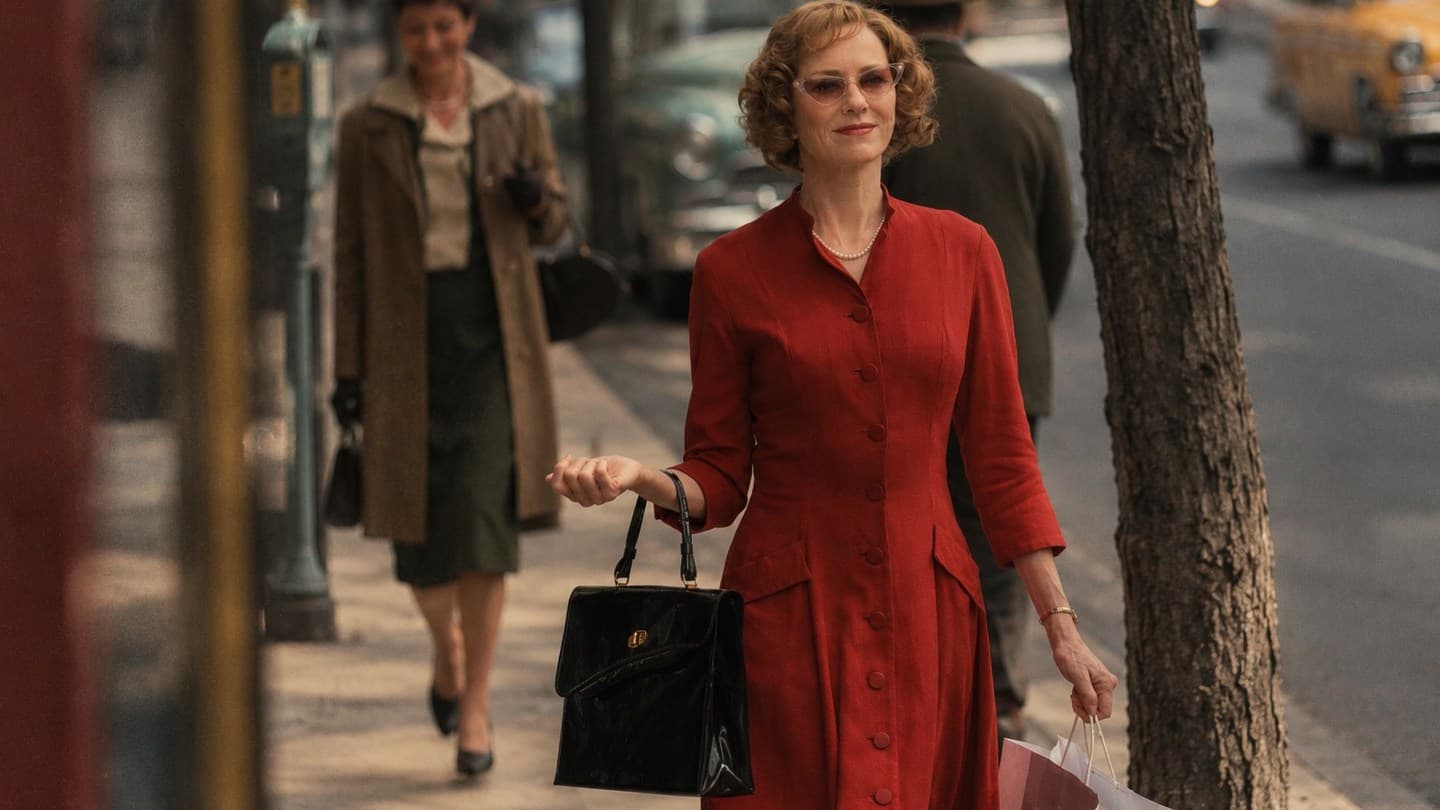
Naomi Watts has built a career out of playing women who seem to have it all together right up until the moment they absolutely, spectacularly don't. Think Mulholland Drive. Think The Impossible. So casting her as a 1960s wife with a secret life-shattering invention tucked away in the garage is almost too perfect - and according to early reviews, she makes the most of it.
The Housewife, directed by Alisa Berger, is a Hollywood thriller that premieres with plenty of buzz but - at least in its early critical reception - a nagging sense that it peaks before it lands. The film clocks in at a lean 100 minutes and is currently sitting at a preliminary 0/10 rating on TMDb, which in fairness reflects a near-total lack of user votes at this stage rather than any kind of verdict.
A 1960s Housewife With a Very Big Idea
Here's the setup, and it's a doozy. Watts plays Lucy - a doctor, a scientist, and also, inconveniently for her ambitions, a housewife. Lucy has developed something called a "mom-ballon": an artificial womb designed to sever the ability to give birth from the female body entirely. If it works, it doesn't just shake up domestic life. It rewrites the natural order.
That's a premise with teeth, and it places The Housewife in a growing lineup of films and shows that use mid-century Americana as a backdrop for psychological unraveling. The genre has become its own cottage industry - nuclear families, perfect kitchens, and something deeply wrong behind the refrigerator door.
The Tension: Sacrifice a Child or Face the Kitchen
The emotional engine of the movie, per its official overview, hinges on an impossible fork in the road. Lucy is pushed by what the film describes as archaic, dislocating figures - voice from the past, or maybe just the crushing weight of expectation - toward a brutal choice. Option one: sacrifice her own child for the sake of her scientific research. Option two: stop running and finally face her life as a housewife, with all the confinement that implies.
That's the kind of high-wire, morally queasy conflict that can make for a genuinely riveting thriller. And apparently, for a while, it does. The critical consensus forming around the film suggests the first half is something special - tightly wound, strange, and anchored by a lead performance described as superb. The problem, per the same reviews, is that the movie gradually trades its unsettling specificity for something more familiar. Hence that word "generic" in the headline reaction.
It's a frustration movie fans know all too well: a film with a killer hook that can't quite decide what to do with it by the third act.
What We Don't Know Yet
Plenty, honestly. There's no confirmed release date yet, which means audiences outside the early review circle will have to wait. Beyond Watts, the cast hasn't been publicly detailed - so anyone hoping to find out who's playing the husband, the neighbors, or those "archaic, dislocating figures" is out of luck for now.
Berger directs, marking another entry in an era where ambitious genre-bending thrillers from distinctive filmmakers are getting real traction. Whether The Housewife ends up in that conversation or lands as a near-miss with a great central idea remains the open question.
The Bottom Line
A formidable actress, a genuinely provocative sci-fi-adjacent premise, and a 1960s setting that's ripe for commentary on domesticity - The Housewife has all the ingredients. Early word says the first half delivers on that promise before the back half lets the air out of the room. Watts, by all accounts, is not the problem. She rarely is.
For now, file this one as a title to watch - a thought experiment about motherhood, autonomy, and self-determination dressed up in pearls and a perfectly pressed apron. If it finds a distributor and a date, it could spark exactly the kind of argument its premise deserves. And if the ending underwhelms? Well, that's a conversation too.
Source: The Hollywood Reporter