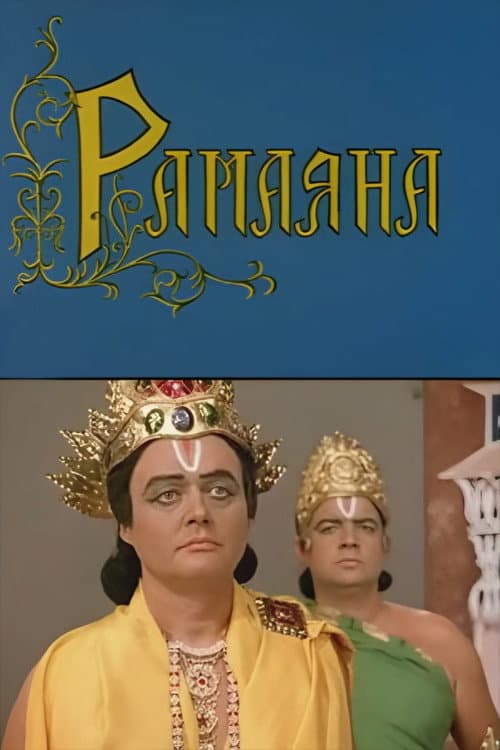
Sunny Deol has never been a man of half measures. When the veteran action star believes in something, he says it loud, and he says it in that trademark baritone that has rattled cinema speakers for four decades. This week, Deol turned his attention away from his own filmography and toward a very unexpected title: Ramayana, the 1976 animated feature directed by Vladimir Grave. In a video message that has since made the rounds online, Deol didn't just recommend the film. He declared it superior to Hollywood output and urged Indian audiences to seek it out. The pitch was simple and characteristically blunt: this is a story worth watching, and it belongs to every Indian.
The endorsement lands at an interesting moment. Ramayana has been part of the global animation conversation for decades, yet it remains a curiosity for many viewers who grew up on the Ramanand Sagar television epic rather than its cinematic predecessors. According to its official description, the film is far from a straightforward retelling. It presents the teachings of the ancient sages through an allegorical narrative that weaves philosophy and devotion together, with Rama, Sita, Lakshmana, Bharata, Hanuman, and Ravana functioning as living parts of India's cultural consciousness rather than mere characters on a page. That framing is exactly the kind of thing that would appeal to Deol, an actor who has spent much of his career championing stories rooted in Indian tradition.
A Hollywood Production With a Very Different Accent
Here is the part that tends to surprise people: despite its unmistakably Indian subject matter, Ramayana is listed as a Hollywood production with Russian as its original language. Grave, a Soviet filmmaker, brought the epic to screen with a cast that includes Gennadi Pechnikov, Margarita Kupriyanova, Ivan Voronov, Boris Chukaev, Galina Stepanova, Valeria Menikovskaya, Vladimir Poluparnev, and Yuriy Luchenko. The film arrived in theaters on June 6, 1976, and was classified under the fantasy and family genres, a pairing that makes sense for a story built on divine intervention, forest exiles, and a ten-headed antagonist.
That cross-cultural origin story is precisely what makes Deol's endorsement so fascinating. He isn't stumping for a domestic production or a streaming original backed by a familiar studio logo. He's telling Indian viewers that a foreign-made adaptation of one of their foundational epics outclasses the spectacle Hollywood routinely exports. Whether one agrees or not, it's a provocative stance from a star who has never been shy about his views on how Indian stories should be told and received.
It's also worth noting what the film is not. This is not a live-action blockbuster with a soaring orchestral score and a marketing budget to match. It's not the kind of release that arrives with a thousand screens and a merchandising tie-in. Its runtime is listed as unknown in the available records, and its TMDb rating sits at an unhelpful 0 out of 10, a figure that reflects a lack of aggregated user votes rather than any judgment on quality. In other words, the numbers tell us almost nothing. What we have instead is a recommendation from one of Bollywood's most recognizable faces, and sometimes that carries more weight than a score ever could.
Why the Timing Feels Right
Deol's call to action also arrives in a cultural climate where Indian audiences are actively reassessing which stories get the big-budget treatment and who gets to tell them. The Ramayana has been adapted countless times across animation, television, and film, and each generation tends to rediscover a version that speaks to it. For viewers raised on glossy visual effects and franchise world-building, a 1976 animated feature might sound like homework. But Deol's argument, boiled down, is that the substance of this story outpaces the polish of anything coming out of the Hollywood machine. That's a claim audiences can test for themselves, and the star clearly wants them to.
There's also something charmingly old-school about the whole affair. A veteran actor using his platform to boost a fifty-year-old animated film rather than his own upcoming slate is the kind of move that reminds you celebrities are sometimes genuine fans first. Deol didn't frame his recommendation as a chore or a history lesson. He framed it as entertainment that happens to carry the wisdom of the ancients inside it, delivered through an allegory that blends philosophy with devotion. That's a tough combination to pull off, and the fact that a Soviet-era production attempted it at all is a story in itself.
For now, the ball is in the audience's court. Deol has made his case, loudly and without hedging. Whether Indian viewers take him up on it and rediscover a nearly fifty-year-old animated epic remains to be seen, but if even a fraction of his fanbase queues it up this weekend, Ramayana may find the second life it has long deserved.
Source: NDTV Profit