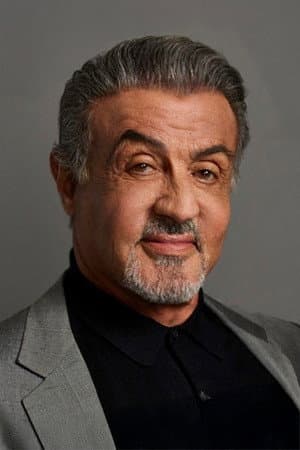
Sylvester Stallone has played plenty of tough guys who take on impossible missions - Rocky Balboa, John Rambo, Barney Ross - but even he draws the line somewhere. The 80-year-old action icon revealed this week that he was offered a "special ambassador" role to Hollywood by Donald Trump, and he turned it down.
The job, as Stallone tells it, would have made him some kind of official liaison between the White House and the entertainment industry - a bridge between Washington and the movie business. It sounds like the setup for a buddy comedy, but apparently the offer was real. Stallone, who has spent the past few years as a vocal supporter of the former president, said he appreciated the gesture but ultimately decided the post wasn't for him.
The revelation is the latest twist in an already unusual relationship between Trump and Hollywood's old guard. Stallone has been a fixture at Trump-adjacent events, and the two men share a certain brand of outer-borough showmanship - Manhattan real estate grit meets Hollywood muscle. But even a friendship that close has its limits.
Stallone says the fit wasn't right
What's interesting about Stallone's decision is that it cuts against the assumption that everyone in his orbit jumps at any offer with a presidential seal on it. According to Stallone, the ambassador idea sounded flattering on paper but raised questions he wasn't interested in answering. He'd have been representing an administration - and by extension, a political agenda - inside an industry that is famously, stubbornly independent. Every studio meeting, every premiere, every casual conversation on a set would have come with an asterisk.
There's also the small matter of Stallone's day job. He's still working. The guy who once punched out Soviet soldiers in the ring and took on entire armies in the jungle isn't spending his days looking for a desk job in Washington. Turning down the role lets him keep his identity squarely where he's spent five decades building it: on screen, not on a government payroll.
And let's be honest - the image of Stallone as an official ambassador is hard to shake. Picture the Senate confirmation hearing. Picture him in a suit testifying about tax incentives for film production. It's a funny thought, but it's also a reminder of how strange the last several years have been at the intersection of politics and pop culture. The line between celebrity and statecraft has never been blurrier, and Stallone just showed that not everyone wants to walk through that door.
A Hollywood that's already wary of Washington
Stallone's decision also lands in a moment when the entertainment industry is nursing a complicated relationship with Washington politics in general. Between tax credit battles, labor fights, and the ongoing debate over how much influence any administration should have over what gets made and where, Hollywood is not exactly in a hurry to invite politicians in. An official ambassador - even one as beloved as Stallone - would have been a lightning rod.
The actor's choice probably saves him from a lot of that noise, but it doesn't erase the bigger question the story raises: why would a president want a Hollywood ambassador in the first place? The answer, presumably, is that movies and television are soft power. They shape how the world sees America, and any White House worth its salt wants a hand on that dial. Stallone, with his blue-collar-hero résumé and global recognition, would have been a natural salesman for that pitch.
He just didn't want to be a salesman. Or at least not that kind.
What it means for Stallone's next act
For fans, the takeaway is simple: Stallone stays Stallone. No oath of office, no diplomatic passport, no committees. Just the guy who's been doing this since before most of today's studio executives were born. He'll keep making movies, keep posting his thoughts online, and keep being one of the last genuine movie stars of a certain era - a man whose name alone still sells tickets.
Whether his friendship with Trump survives the polite no is anyone's guess, but Stallone has never been shy about saying what he thinks. This is a guy who once described his own career as a series of rejections that he refused to accept. Turning down a president is, in its own way, just another line on that résumé.
And in a town that rarely says no to power, that's almost refreshing. Almost.
Source: Variety