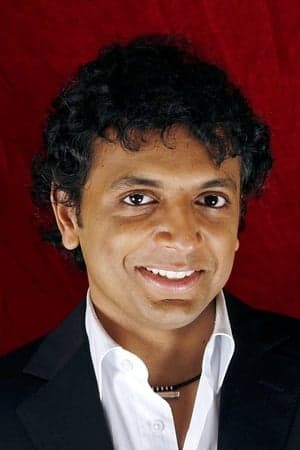
M. Night Shyamalan has spent three decades bending audiences’ minds with twist-heavy thrillers, but even the master of the unexpected had to start somewhere. In a new career-spanning interview, the filmmaker behind Split and The Sixth Sense opened up about the movies that first planted the seeds of his signature style - and the list is a fascinating crash course in suspense, paranoia, and pure cinematic audacity.
Shyamalan, who has always worn his influences on his sleeve, pointed to a mix of Steven Spielberg classics and European horror touchstones as the key ingredients in his creative DNA. For a director who’s made a career out of subverting expectations, it turns out his own expectations were shaped by some of the most beloved films of the 1970s and ’80s.
The conversation quickly zeroed in on Spielberg’s Jaws, which Shyamalan cited as the ultimate lesson in restraint. He explained that the genius of Jaws isn’t the shark - it’s what you don’t see. The film’s long stretches of calm, punctuated by sudden explosions of terror, taught him that suspense is about patience. That philosophy has echoed through his own work, from the creeping dread of Signs to the slow-burn revelation in The Village. For Shyamalan, the scariest moment in any movie is the one right before the monster shows up.
But it wasn’t all popcorn blockbusters. Shyamalan also named Roman Polanski’s Rosemary’s Baby as a pivotal influence, praising how the film weaponizes domestic spaces and turns everyday paranoia into a nightmare. That apartment-building claustrophobia is all over Shyamalan’s The Visit, where grandpa and grandma’s home becomes a staging ground for pure psychological terror. He admitted that Polanski’s ability to make you distrust everything - including the room you’re sitting in - was a direct blueprint for his own approach to building unease.
Naturally, no Shyamalan influence list would be complete without a nod to Alfred Hitchcock. The filmmaker called Rear Window “the perfect thriller,” marveling at how a single confined set can generate so much tension. He’s clearly taken that lesson to heart; several of his own movies, including Glass and Trap, unfold in deliberately restricted locations where the real drama is character psychology rather than sprawling action. For Shyamalan, Hitchcock proved that the camera doesn’t need to move far to make your heart race.
One surprising pick was the 1973 Australian horror gem The Last Wave, directed by Peter Weir. Shyamalan described it as a film that “haunts you long after the credits,” praising its dreamlike logic and its refusal to hand audiences easy answers. That influence is unmistakable in the director’s own endings, which famously polarize viewers - either they love the ambiguity or they hate it. Shyamalan embraced that divide, noting that a movie which gets people arguing is doing its job.
He also tipped his hat to Spielberg’s Close Encounters of the Third Kind, which he said taught him how to balance the supernatural with deeply human emotion. The film’s central obsession - a man driven by something he can’t explain - feels like a direct ancestor to characters like David Dunn in Unbreakable. Shyamalan’s heroes are rarely action stars; they’re ordinary people forced to confront extraordinary circumstances, and Close Encounters gave him the template for treating the weird with heartfelt sincerity.
Rounding out his list was the Wes Craven shocker A Nightmare on Elm Street, which Shyamalan praised for the terrifying idea that you can’t trust your own reality. That concept - questioning what’s real and what’s manufactured - has become a Shyamalan signature, popping up in everything from The Happening’s unsettling premise to the fractured perspective in Old. For a director often criticized for his wild twists, it’s refreshing to hear him acknowledge that even his most out-there ideas have roots in classic genre filmmaking.
Shyamalan was quick to note that these films didn’t just shape his style - they gave him permission to take risks. In an era when studios favor safe, formulaic blockbusters, he’s carved out a space for mid-budget, original storytelling that still draws audiences to theaters. His recent run of thrillers, including Knock at the Cabin and the upcoming Trap, proves there’s still an appetite for movies that keep you guessing.
The interview also touched on his working relationship with audiences, whom he credits for being smarter than most Hollywood execs give them credit for. Shyamalan argued that viewers come to his movies expecting to be challenged, and he refuses to talk down to them. That trust, he said, was born from watching how those classic films respected their audiences - never spelling out every detail, never apologizing for complexity.
For fans of Shyamalan, the list is a welcome window into his process. It’s a reminder that behind every jaw-dropping twist is a filmmaker who grew up loving the same movies we did, just with a keener eye for what makes them tick. Whether you’re a die-hard defender of his most divisive endings or someone who just got hooked on Split, the interview is a fun dive into the mind of one of Hollywood’s most singular voices.
As Shyamalan continues to churn out new projects, it’s clear those early influences haven’t faded - they’ve just been remixed through his own twisted lens. And honestly, that’s exactly what makes his filmography so endlessly rewatchable. Give him a quiet hallway, a suspicious neighbor, or just a beach that ages people rapidly, and he’ll find a way to turn it into cinematic gold. Old tricks, new tricks - it’s all one big, beautifully unsettling bag.
Source: India Weekly