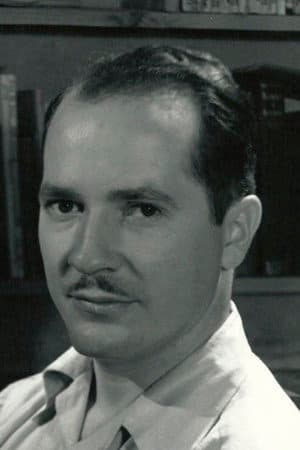
Robert A. Heinlein was many things - a Naval officer, a boundary-pushing sci-fi novelist, and the man whose imagination gave the world Starship Troopers. But a Hollywood insider? That's a much messier story. The author's relationship with the film business was, by most accounts, one of cautious fascination mixed with genuine frustration, and it casts a long shadow over the journey his most famous novel took to the screen.
For readers who only know Heinlein through Paul Verhoeven's 1997 bug-squashing spectacle - or the later animated and live-action spinoffs - it's worth remembering that the writer spent decades circling Hollywood before any of that existed. And his feelings about Tinseltown were complicated, to put it mildly.
A Writer Who Trusted the Page More Than the Screen
Heinlein came up in the era of pulp magazines, where a writer's word was basically law once it hit the page. That sensibility never really left him. He was a meticulous world-builder who cared deeply about internal logic, and the collaborative, committee-driven nature of filmmaking struck him as a fundamentally foreign way to tell a story. Hollywood, in his view, had a habit of sanding down the ideas that made a book interesting in the first place.
He wasn't a snob about the medium - he genuinely enjoyed movies and understood their cultural reach. But he drew a firm line between what a novel could accomplish and what a studio would allow. That tension would define nearly every screen deal he entertained.
The Screenplay He Wrote Himself
One of the more revealing chapters in Heinlein's Hollywood saga is that he didn't just sit back and let others adapt his work - he rolled up his sleeves and tried his hand at screenwriting. He produced his own script treatments for projects, determined to be the one translating his vision rather than handing it off. On Starship Troopers in particular, he envisioned a film that stayed true to the book's military-philosophical core.
That's the irony fans love to chew on today: the Heinlein-approved version of Starship Troopers would have looked nothing like Verhoeven's satirical, tone-popping take. The author wanted earnest engagement with ideas about duty, citizenship, and service. What audiences eventually got was a director openly winking at the material - and Heinlein never lived to see it. He passed away in 1988, nearly a decade before the movie landed in theaters.
Why the Verhoeven Version Stings for Purists
It's impossible to talk about Heinlein's Hollywood feelings without acknowledging the elephant-sized bug in the room. Verhoeven's Starship Troopers is a beloved cult classic, but it's also a famously loose - some would say hostile - reading of the source novel. The film leans into fascist-iconography satire; the book is often read as a sincere (if controversial) argument about civic responsibility. Whether that gap would have delighted or devastated Heinlein is one of sci-fi's great unanswerable debates.
What we do know is that Heinlein's general wariness of studios wasn't paranoia - it was pattern recognition. He'd watched adaptations mangle the work of peers and had enough experience to suspect his own wouldn't fare better. Science fiction in his lifetime was too often treated by Hollywood as cheap spectacle material, a reputation that only really began to shift in the late 1970s and 1980s with the likes of Star Wars and Blade Runner.
A Legacy Hollywood Keeps Coming Back To
Here's the part Heinlein might have appreciated: Hollywood can't quit him. From Starship Troopers and its sequels to The Puppet Masters and various projects that never quite escaped development limbo, his catalog remains a renewable resource for filmmakers. Whatever his frustrations, his stories proved too big and too strange for the screen to ignore.
So how did Heinlein really feel? Probably the way a lot of great authors do about Hollywood - intrigued by its reach, skeptical of its methods, and protective of the thing he actually controlled: the page. His books outlived every deal he ever signed, and that's a kind of final cut no studio can touch.
Source: SlashFilm