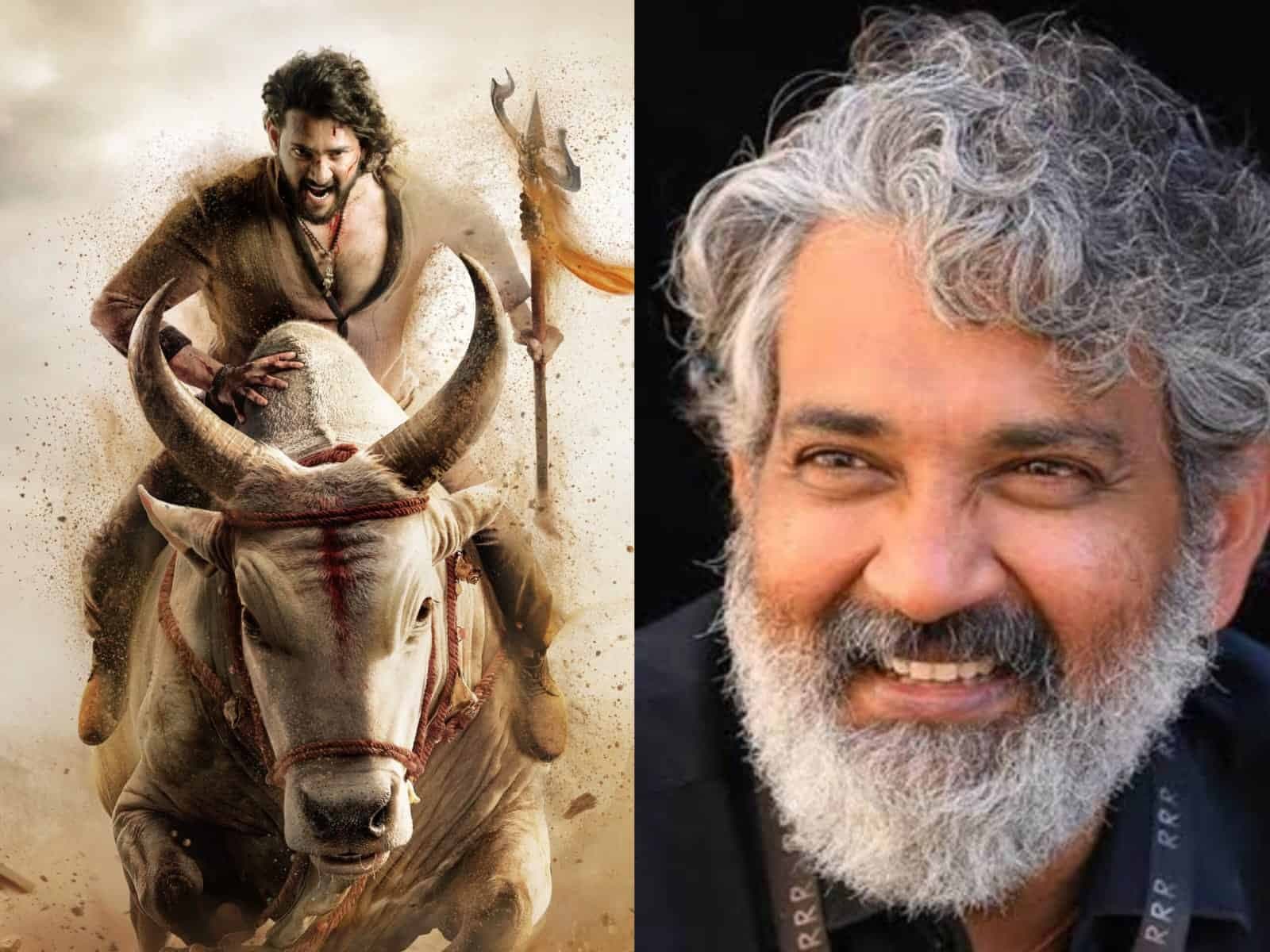
S.S. Rajamouli has spent the better part of two decades convincing audiences that impossible things can look effortless. He put a man on his shoulders and made him punch a tiger. He turned two revolutionaries into a dance-off against the British Empire. He built a kingdom where motorcycles fly out of volcanoes and nobody in the theater blinks. So when word broke that his next Hollywood-facing project would plant itself in one of the oldest living cities on Earth, the obvious question wasn't whether he could pull it off - it was why he'd want to slow down in the first place.
The answer, by all accounts, is that he doesn't see it as slowing down at all. The filmmaker behind "Baahubali" and "RRR" has been circling a story rooted in Varanasi, the ancient city on the banks of the Ganges, for his English-language debut. And the approach, as it's been described, is deliberately, almost stubbornly grounded - a word you don't normally associate with a director whose movies treat physics like a polite suggestion.
That's the headline here, and it's a bigger deal than it sounds.
A City That Doesn't Need a Green Screen
Varanasi, also known as Kashi or Banaras, is one of the oldest continuously inhabited cities in the world. It's a place where funeral pyres burn around the clock at the ghats, where pilgrims bathe at dawn, where the streets fold in on themselves in a way that no production designer could improve on. It is, in other words, a location with its own gravity.
For a director whose visual signature is maximalism - every frame packed, every set piece escalated - choosing Varanasi as a setting is a statement. The city gives you scale for free. What it doesn't give you is the ability to fake it. If Rajamouli wants that texture, he has to actually shoot it, respect it, and let it breathe. That's the grounded approach in a nutshell: less CGI cathedral, more real-world awe.
It's also a canny move for a Hollywood crossover. Western audiences have seen plenty of rendered ancient worlds. What they haven't seen much of is the genuine article, captured with the kind of reverence a filmmaker brings when he's telling a story that belongs to his own cultural backyard. Rajamouli has always been a showman, but he's never been a tourist in his own material.
The Man Who Made the West Look Up
It's worth remembering how we got here. When "RRR" hit American screens, it wasn't supposed to become a phenomenon. It was a Telugu-language period action epic with a runtime long enough to require a snack strategy. And yet it turned into a genuine crossover moment - packed houses, audience singalongs, a song-and-dance number that people performed at weddings and on late-night television. The film made the Academy sit up and handed Rajamouli a level of name recognition that few international directors ever achieve in the States.
That success bought him something rare: the freedom to make whatever he wants, at whatever scale he wants, with whatever language he wants. And he's apparently choosing to spend that capital on a story that trades spectacle-by-volume for atmosphere-by-place. It's the kind of pivot that either looks like genius in hindsight or gets second-guessed forever. With Rajamouli, the track record leans hard toward the former.
There's also a broader shift at play. Hollywood has spent the last few years discovering that audiences are hungry for stories from outside the usual Anglophone pipeline - that a film doesn't need to be made in English to conquer the box office, and doesn't need to be remade in English to be understood. Rajamouli walking into the studio system with a Varanasi-set story is the logical next step in that conversation. He's not asking for permission to bring his world to a global audience. He's assuming it.
What "Grounded" Actually Means for a Rajamouli Film
Let's be clear about one thing: grounded doesn't mean small. This is still the guy who staged a forest ambush with wild animals and turned it into one of the most kinetic sequences of the decade. Grounded, in his hands, likely means emotionally rooted rather than effects-driven - a story where the spectacle comes from the place itself, from ritual and river and the weight of centuries, rather than from a render farm.
That's a fascinating proposition. Rajamouli's greatest gift has never really been the VFX. It's been his instinct for myth - for taking oversized, archetypal emotions and making them land in a viewer's chest. Varanasi, a city built on the intersection of life and death, devotion and commerce, is mythic territory in the most literal sense. If he's trading digital spectacle for spiritual spectacle, that's not a retreat. That's a reload.
Nothing about this project has been locked down in the way studios like to lock things down, and the specifics remain the stuff of industry chatter rather than confirmed fact. But the intention is clear enough to get excited about. Rajamouli has already proved he can make the whole planet look up. Now he wants to make it look closer.
And honestly? A director who's spent his career making the impossible believable has earned the right to try making the believable feel impossible. Varanasi might just be the wildest thing he's ever put on screen - precisely because he isn't going to invent a single thing about it.
Source: gulte.com