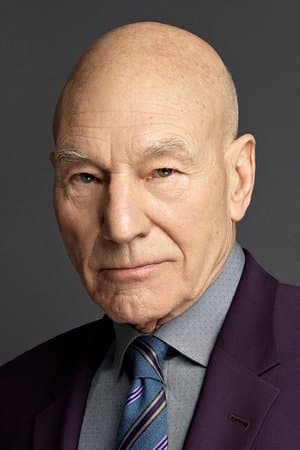
Patrick Stewart, the classically trained English actor who became a global pop-culture icon twice over - first as the steady, Shakespearean captain of the starship Enterprise and later as a telepathic mutant leader in the X-Men franchise - has died at 86. The news closes a remarkable, decades-spanning career that few performers could match, and it leaves two of the most passionate fandoms in entertainment mourning the same man.
Stewart passed away at 86, according to the headline confirming his death. Beyond that, the details remain private, and this is a moment for reflection rather than rumor. What's beyond dispute is the sheer reach of his work: he was one of an extraordinarily small club of actors who anchored both a legendary sci-fi television franchise and a blockbuster superhero film series, and he did it with the kind of gravitas that made fans lean in rather than laugh.
The Captain Who Gave Star Trek Its Moral Center
For a generation of viewers, Stewart is Captain Jean-Luc Picard. When Star Trek: The Next Generation launched, it carried the weight of an iconic predecessor, and plenty of skeptics doubted a bald, serious British stage actor could fill those shoes. He answered the doubters by turning Picard into something entirely his own: a diplomat, a philosopher, a man who quoted Shakespeare and argued for humanity's better angels as readily as he gave orders on the bridge.
Across seven seasons and four feature films, Stewart built the character into one of science fiction's most enduring figures. Picard wasn't a swashbuckler; he was a leader who believed in reason, ethics, and the power of words - qualities that made him feel real in a way few genre heroes ever have. When he returned to the role decades later for the series Star Trek: Picard, it proved that the character and the actor had lost none of their hold on audiences. It was the rare case of a franchise legacy being honored rather than exploited.
From Professor X to a Whole New Kind of Icon
If Star Trek made Stewart a sci-fi legend, X-Men made him a superhero-movie pioneer. Cast as Professor Charles Xavier in the first X-Men film, he helped prove that comic-book adaptations could be taken seriously - that they could carry weight, drama, and actors of genuine pedigree. It's easy to forget now, but that franchise's early success helped lay the groundwork for the superhero boom that followed, and Stewart was right at the center of it.
He brought dignity and a quiet, commanding warmth to Xavier, a mentor figure guiding a team of misfits. The role also gave him a beloved on-screen rivalry with Ian McKellen, whose magnetic turn as Magneto made their scenes together a highlight of the series. Stewart would return to the part again and again over the years, cementing a rare double legacy: a captain and a professor, two of the most recognizable figures in modern nerd culture.
A Shakespearean First, Always
What's easy to overlook in all the sci-fi and spandex is that Stewart's foundation was the stage - and specifically, the classics. He spent years with the Royal Shakespeare Company, and his command of classical text was the engine behind everything he did on screen. That training is why Picard could recite a sonnet and sound like he meant every syllable, and why Xavier could deliver gravitas without tipping into melodrama.
His voice alone was a career: rich, precise, and instantly recognizable. He made the art of the measured monologue feel effortless, and he never seemed to condescend to the material, whether it came from Shakespeare or a sci-fi script. That generosity - treating genre work with the same respect as the canon - is part of why fans adored him, and why his death will land hard in corners of the internet that don't agree on much else.
A Legacy That Spans Generations
Stewart's death at 86 marks the end of an era, but the work isn't going anywhere. Somewhere tonight, someone is rewatching an episode of The Next Generation and hearing that voice command the bridge; someone else is revisiting an early X-Men film and remembering how a bald man in a wheelchair made mutant powers feel noble.
It's a strange kind of comfort, but it's real: Stewart leaves behind characters that will outlive all of us, played by a man who never phoned it in. He gave fans two icons and a career's worth of proof that science fiction and Shakespeare belong on the same shelf. For that, and for the dignity he brought to every role, he'll be remembered - by Trekkies, by X-Men devotees, and by anyone who ever believed a well-chosen word could win the day.
Source: The Hollywood Reporter