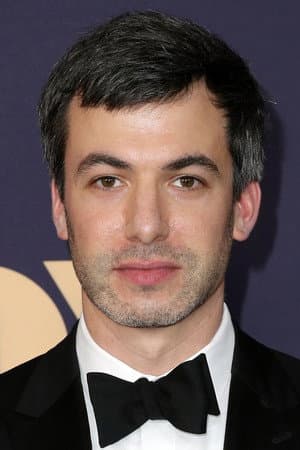
Nathan Fielder brought his latest provocation to the New York Film Festival this week, and the room reportedly didn't know whether to laugh, squirm, or both at once. The comedian and filmmaker behind some of the most uncomfortable comedy of the past decade unveiled his documentary about Elizabeth Holmes, the disgraced Theranos founder, at a NYFF screening that quickly became one of the festival's most talked-about events.
That a Fielder project would generate a chaotic room is hardly a shock. What surprised attendees, according to reactions out of the screening, was how much the film actually revealed - about Holmes, about the machinery of self-invention that built her, and maybe about why audiences keep obsessing over her story.
A Screening That Refused to Sit Still
NYFF audiences are typically a polite bunch. They clap at premieres, they linger for Q&As, and they rarely turn a screening into something resembling a comedy club on open-mic night. This one apparently broke the mold. Reports from the theater describe waves of laughter rolling through moments that were, on paper, deadly serious - and audible gasps at others.
That tonal whiplash is Fielder's signature. He built a career on making viewers unsure whether they're watching a prank, a portrait, or a slow-motion disaster. Applying that sensibility to Holmes, a figure already synonymous with Silicon Valley delusion, seems almost too perfect a match. She promised a revolution in blood testing, raised hundreds of millions, and was later convicted on fraud charges. The gap between the pitch and the reality is the kind of story Fielder has spent years circling.
Why Holmes Still Fascinates
It's been years since Holmes's trial and conviction, yet she remains a fixture of the cultural conversation. Documentaries, podcasts, limited series, books - the Theranos saga has been picked apart from nearly every angle. So the obvious question hanging over the NYFF screening was simple: what's left to say?
The answer, based on early reactions, seems to be that Fielder isn't interested in relitigating the timeline. He's interested in the performance. Holmes was, in many ways, a character she constructed - the black turtleneck, the deep voice, the Jobs-ian mystique. A filmmaker whose entire body of work interrogates performance and sincerity is uniquely positioned to dig into that.
A Festival Season Full of Buzz
The screening lands in the middle of a busy fall festival circuit, where NYFF has become a reliable launchpad for awards-season conversation and cultural debate alike. A Fielder premiere fits that mission neatly. His projects tend to skip the traditional marketing playbook and instead spread through word of mouth, half-whispered anecdotes about what exactly happens on screen, and the irresistible urge to tell a friend, "You have to see this."
That dynamic was clearly on display here. Even before the lights came up, the screening had become a story in itself - the kind of event where the audience's reaction is as much the point as the film. Festival buzz is often manufactured. This felt more organic, messier, and harder to fake.
The Fielder Method, Applied
Fielder's career has been a long experiment in dissolving the boundary between the real and the staged. He's built entire projects around people who don't realize how much they're being studied, then turned the camera on himself to see what happens when the studying gets uncomfortable. Taking on a subject as exhaustively documented as Holmes means he can't rely on the element of surprise in the same way. Instead, he seems to be leaning into something else: the absurdity of the whole affair.
That approach may prove polarizing. Some viewers will come away feeling the film found something new in a story they thought they knew. Others may walk out wondering what, exactly, they just watched. Both reactions are, in a sense, a win for a filmmaker who has never seemed especially interested in easy answers.
What Happens Next
The NYFF screening is just the first stop. Word from the festival will inevitably shape how the documentary is received when it reaches wider audiences, and Fielder's fanbase is nothing if not vocal. Expect the conversation to keep building - debates about the film's ethics, its methods, and whether Holmes deserves yet another close-up.
For now, the takeaway is clear: Fielder has once again managed to turn a screening into an event. Whether the documentary ultimately lands as incisive commentary or an elaborate provocation, it has already done the one thing every filmmaker hopes for at a festival - it got people talking, loudly, in a room together.
Source: The Hollywood Reporter