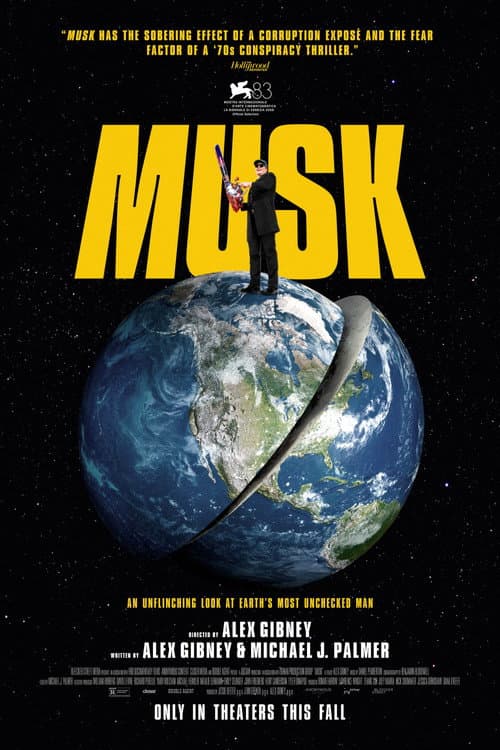
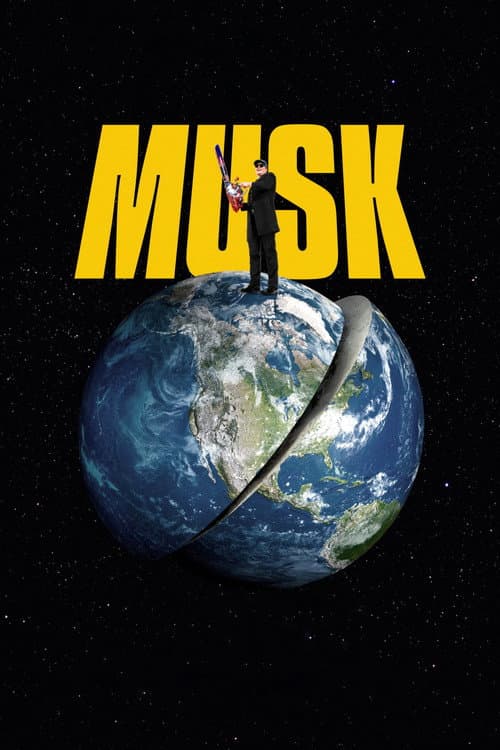
Alex Gibney's latest documentary has a distribution problem that has nothing to do with theaters and everything to do with the internet. Every major social media platform has turned down paid promotional advertising for "Musk," Gibney's upcoming two-part, 235-minute deep dive into the life and influence of Elon Musk, according to exclusive reporting. The film is set to arrive on October 9, 2026, but the usual playbook for promoting a documentary - targeted ads across the biggest digital platforms - appears to be off the table entirely.
If that sounds like a story in itself, well, that's the point. A documentary about the world's most powerful tech figure is struggling to buy ads on the very platforms that same figure either owns, runs, or has spent years publicly battling. You don't need a film degree to see the irony.
What's Actually in the Film
According to its official logline, "Musk" promises an "incisive look behind the legend of Elon Musk, the world's most heralded 'inventor-entrepreneur' who has enormous influence on the world in which we all live." Gibney, one of the most decorated documentarians working today, isn't known for pulling punches, and the two-part runtime of 235 minutes suggests he isn't rushing the story either.
The film's credited cast is a roster of people who know Musk from wildly different angles. There's Musk himself, appearing via archive footage. There's Justine Musk, his first wife. There's Ashley St. Clair. There's journalist Kara Swisher, one of Silicon Valley's sharpest and most persistent critics. There's Martin Eberhard, the original Tesla co-founder whose relationship with Musk has been complicated for two decades. There's Zoë Schiffer, the reporter who has covered Musk's companies with granular detail. And there's Geoffrey Hinton, the so-called "godfather of AI," who has spent recent years warning about the very technology he helped create.
Put those names in one documentary and you've got a film that touches Musk's personal life, his corporate history, his media feuds, and the broader tech landscape he's reshaped. It's a lot to fit into one sitting - hence the two-part structure.
The Ad Rejection Story
The exclusive report that all the major platforms passed on paid ads is the headline here, and it raises more questions than it answers. Platforms generally don't comment on individual ad decisions, and none have offered a public explanation for rejecting spots for this particular film. Whether the refusals stem from internal policy, political sensitivity, or something else entirely remains unclear.
What is clear is the practical effect. Social media advertising is one of the primary tools documentary distributors use to reach audiences beyond the already-converted. A film about Elon Musk would presumably have no trouble finding viewers interested in the subject - the man is arguably the most-discussed private citizen on the planet. But without paid promotion on the big platforms, getting the word out becomes a scramble of earned media, organic posts, trailers, and whatever press coverage the controversy itself generates. In a strange way, the rejection story may end up doing some of the marketing work for them.
There's also the question of precedent. Documentary filmmakers have long complained about opaque advertising rules on social platforms, particularly for politically charged or corporate-critical work. If major platforms are now drawing a line at a Musk documentary, that's a data point the entire nonfiction film community will be watching closely.
Why This One Might Land Differently
Timing matters, and the timing here is loaded. "Musk" arrives in October 2026, after years in which its subject has moved from tech celebrity to cultural lightning rod. He's been the richest person alive, a presidential-adjacent power broker, the owner of a major social platform, and a figure whose every post seems to generate a news cycle. He's also someone who has repeatedly tangled with the press, so a journalistic documentary carrying his name is unlikely to get a quiet rollout.
Gibney's filmography makes him a natural fit for the material. He's built a career on portraits of power and its discontents, and Musk is about as big a subject as a documentarian could ask for. The runtime - nearly four hours split across two parts - signals that this is meant to be comprehensive rather than quick-hit.
For now, the film's rating sits at 0/10 on TMDb, which simply reflects that no audience has seen it yet. That number will move the moment "Musk" drops on October 9. The bigger question is how many people will even know it's out there, given that the usual paid megaphones have reportedly gone silent. For a movie about the most connected man in tech, that's a remarkably disconnected start - and possibly the most on-brand twist of all.
Source: The Hollywood Reporter