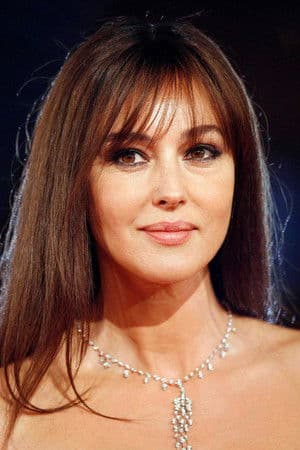
Monica Bellucci has never been one to soften her edges for the sake of comfort, and at this stage of her career she is more willing than ever to say exactly what she thinks. In a candid new conversation, the Italian screen icon opened up about the double standards that still govern Hollywood casting, her experience sharing the screen with Mel Gibson, and why she regards onscreen nudity as a storytelling instrument rather than a scandal waiting to happen. It's the kind of interview that reminds you why Bellucci has remained a fixture of international cinema for the better part of four decades - she treats the industry's unwritten rules as things to be questioned, not obeyed.
Taking Aim at the Double Standard
Bellucci's entry point into the ageism discussion is James Bond, and with good reason. When she played Lucia Sciarra in Spectre, she became the oldest actress ever to appear as a Bond woman at 50 - a detail that sparked endless commentary at the time, much of it missing the point entirely. Her observation is simple and cutting: leading men in the franchise keep getting older while their romantic interests stay perpetually young, and nobody blinks. Bellucci has framed her casting as a quiet act of defiance, proof that desirability and screen presence don't come with an expiration date stamped on them. She has been refreshingly blunt about the fact that Hollywood tends to write women off once they pass a certain threshold, and she seems genuinely amused by how much attention her mere existence in that world generated. The subtext is hard to miss: the outrage shouldn't be that a 50-year-old woman shared scenes with Daniel Craig - it should be that it took this long.
The Mel Gibson Chapter
The interview also turned to her work alongside Mel Gibson, a collaboration that put her in the orbit of one of Hollywood's most polarizing figures. Bellucci has consistently described the experience in professional terms, focusing on the craft rather than the controversy that trails her co-star. She's spoken about the craft of performance and what she took away from the collaboration. For an actress who has navigated the European art-house circuit and the American studio machine with equal ease, the takeaway seems to be that her job is the work itself - and she refuses to let anyone else's baggage define how she reflects on it.
Nudity as Wardrobe, Not Spectacle
Perhaps the most quotable portion of the conversation concerns her philosophy on onscreen nudity. Bellucci offered a comparison that is both disarming and oddly precise: she likened it to a costume that brings a role to life. In her view, baring the body is no different in principle from slipping into a period gown or a soldier's uniform - it's a tool the performer uses to serve the character, not a concession extracted for the viewer's benefit. Coming from an actress whose career has included some of the most discussed nude scenes in modern European cinema, the framing carries real weight. She isn't pretending those choices were incidental; she's insisting they were deliberate, artistic, and hers. It's a rebuttal to the puritanical streak that still runs through so much film discourse, where a woman's body on screen is treated as either a marketing gimmick or a moral failing, rarely as a legitimate part of the craft.
Why Her Voice Still Carries
What makes Bellucci's comments land isn't novelty - plenty of actresses have railed against Hollywood's ageism, and plenty will again. It's authority. She has lived through the eras she's critiquing, moved between industries and languages, and built a career on her own terms while the ground shifted beneath her. When she says the rules are arbitrary, she's speaking as someone who has tested them from the inside. Her remarks arrive at a moment when the industry is still wrestling with who gets to be cast, who gets to be desired on screen, and who gets to decide what a performance requires. Bellucci's answer, delivered with characteristic poise, is that none of those questions should be answered by a birth certificate or a prudish reflex. Whether Hollywood listens is another matter - but she's clearly done waiting for permission to make her case.
Source: Variety