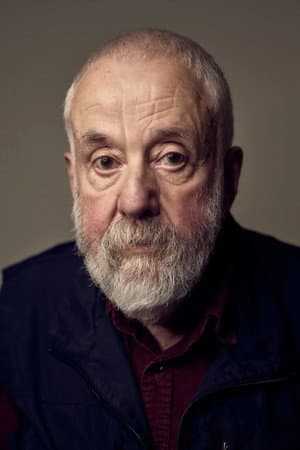
Mike Leigh, the master of gritty, humanist cinema and the man behind Secrets & Lies and Naked, has never been one to mince words. So when he sat down to champion the legacy of a little-known East End communist who single-handedly brought world cinema to British shores, he didn’t hold back. In a new interview, Leigh celebrated the life and work of the man he insists was fighting against "just Hollywood crap" long before it was fashionable, painting a vivid picture of a renegade film distributor who treated cinema as a political act rather than a product.
The subject of Leigh’s admiration is filmmaker, activist, and tireless champion of the art house: the late, great figure who ran a legendary film club in London’s East End during the mid-20th century. This wasn't a man angling for Oscars or courting studio executives. Instead, he was the guy hauling 16mm reels of Kurosawa, Truffaut, and Eisenstein into working-class neighbourhoods, convinced that the proletariat deserved more than the mainstream escapism churned out by the big American machine. Leigh’s point, delivered with his trademark mix of affection and irritation, is that this forgotten pioneer was doing the vital, unglamorous work of expanding audiences’ minds - showing that cinema wasn’t just about stars and spectacle, but about ideas, culture, and a mirror held up to different societies.
Leigh, who has spent his own five-decade career chronicling the lives of ordinary Britons with unflinching honesty, clearly sees a kindred spirit in the East End organiser. For him, the film club wasn’t just a place to watch movies - it was a community hub, a place of radical education, and a direct challenge to the notion that entertainment had to be dumbed down to be enjoyed. The director spoke with palpable frustration that this man’s contribution has been largely airbrushed from the history books, overshadowed by the flashier stories of the French New Wave or the golden age of Hollywood. To Leigh, this omission is a cultural crime, because it erases the story of how foreign cinema actually found its footing in the UK - not in plush West End theatres, but in draughty church halls and busy social clubs in Stratford and Stepney.
The historical context here is rich. During the post-war decades, the UK film scene was dominated by American imports and the cosy conservatism of homegrown studio fare. But in the East End, a neighbourhood already steeped in waves of immigration and radical politics, there was a hunger for something different. Leigh’s championing of this figure isn’t just nostalgic whimsy; it’s a pointed critique of modern film consumption. In an era where streaming algorithms feed us identical superhero sequels and franchise reboots, Leigh’s praise for a man who risked his own money and reputation to show a Polish documentary or an Italian neorealist drama feels astonishingly relevant. The director essentially argues that we’ve traded a diverse, challenging cinematic diet for a sugary, high-budget buffet - and we’re worse off for it.
It’s a story that resonates with Leigh’s own filmmaking philosophy. His movies are famously built on improvisation, real locations, and the texture of everyday life - the polar opposite of a green-screen spectacle. He sees this East End pioneer as the original alt-cinema disruptor, someone who believed that audiences were smarter than the industry gave them credit for. The praise also carries a subtle jab at the current state of the industry, where "independent" is often a marketing label rather than a financial reality, and where risk-averse executives chase IPs rather than instincts. Leigh’s reverence for the past isn’t about nostalgia for its own sake; it’s a challenge to the present, a reminder that cinema once had a duty to provoke, challenge, and educate the masses, not just pacify them.
Of course, this is Mike Leigh we’re talking about, so the interview isn’t without its dry, socially observant wit. His dismissal of the mainstream fare isn't a blanket condemnation - he’s too smart for that - but rather a lament for the lost art of cinematic discovery. There’s something gloriously unmodern about a man who dedicated his life to hauling prints of Bicycle Thieves to a crowd of dockworkers, asking them to question their own reality through a lens thousands of miles away. That’s the kind of moviemaking faith that Leigh protects with fierce pride, and he leaves us with the feeling that the industry could do with a few more eccentric, dogmatic believers in the power of the medium.
While there’s no film officially tied to this story - no new Leigh movie on the horizon announced alongside it - the interview functions as a passionate essay on film culture. It’s a reminder that the history of cinema isn’t just written by directors and stars, but by the passionate few who insisted on showing us something new. For Leigh, that East End communist was a guardian of the global imagination, and his legacy deserves a standing ovation, not a footnote. The director’s faithful tribute is a call to action: switch off the algorithm, dig out a foreign classic, and remember that cinema was always meant to be a window, not just a mirror. And honestly, when Mike Leigh tells you to broaden your horizons, you listen - because the man’s been right about almost everything else for the past fifty years.
Source: theguardian.com