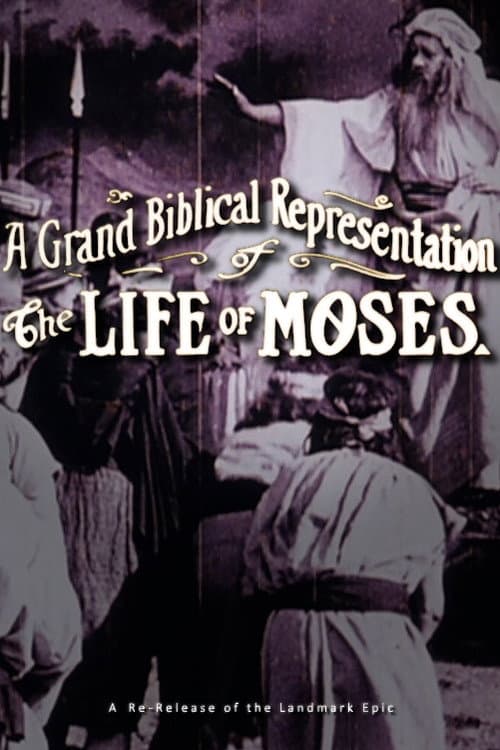
Some movies are remembered as masterpieces. Some are remembered as glorious disasters. And then there’s Life of M, the 1909 biblical epic that has somehow earned the dubious honor of being called both a “literary assassination” and, according to one outraged critic of the era, a Hollywood scandal so potent it practically launched the concept of the cinematic train wreck. With a TMDb rating of a rock-bottom 1/10, this silent relic isn't just a footnote in film history - it’s a cautionary tale told in five excruciating parts.
The saga began on December 4, 1909, when Vitagraph Studios, under the direction of J. Stuart Blackton, unleashed the first chapter of what they boldly advertised as a “Biblical Film-de-Luxe.” The ambitious project was serialized into five installments over the next two and a half months, concluding on February 19, 1910. The titles alone - The Persecution of the Children of Israel by the Egyptians, Forty Years in the Land of Midian, The Plagues of Egypt and the Deliverance of the Hebrews, The Victory of Israel, and The Promised Land - sound less like a movie and more like a seminary syllabus. But the real controversy wasn’t the length or the overly specific chapter headings. It was the sheer, unadulterated audacity of cramming the entire Book of Exodus into 54 breathless minutes.
Let’s be clear about the scale of the disaster. We’re not talking about a quiet misfire. We’re talking about a film so poorly received by posterity that modern audiences who’ve somehow managed to track it down have collectively shrugged into a 1/10 rating. That’s not just bad; that’s historically inept. Pat Hartigan stars as Moses, presumably spending most of his screen time looking stoic while special effects that probably involved cardboard and string attempt to summon divine wrath. He’s joined by Julia Arthur, William Humphrey, Charles Kent, and Edith Storey, a cast of stage veterans who likely had no idea they were participating in what would become a punchline for the next century.
The “scandal” part, as pieced together from contemporary trade publications and historical accounts, wasn’t about any on-screen naughtiness. In 1909, you couldn’t exactly scandalize audiences with explicit content. No, the scandal was literary and theological. Religious leaders and critics of the day were incensed at the liberties taken with the source material. One particularly venomous review, which has since become legend among silent film historians, decried the production as “a literary assassination,” arguing that the sacred text had been chopped, spliced, and reduced to a series of garish tableaux for the amusement of the masses. The idea that the most profound story of liberation and covenant in the Judeo-Christian tradition could be boiled down to a five-part spectacle with intertitles was, to many, nothing short of profane.
It’s easy to laugh at the pearl-clutching from over a century ago, but consider the context. The motion picture industry was still in its infancy, and the idea of cinema as a legitimate art form was hotly contested. For the religious establishment, seeing Moses parted from his staff and turned into a matinee idol was deeply offensive. For the literati, it was the ultimate dumbing-down of a foundational text. Vitagraph, for their part, leaned into the controversy with that shameless “Film-de-Luxe” tagline, draping themselves in an air of prestige while presumably raking in nickels from curious audiences who wanted to see what all the fuss was about.
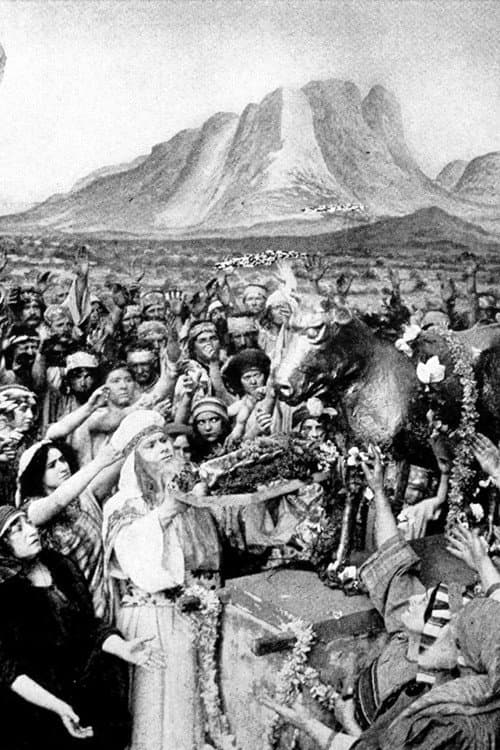
The film’s legacy is a strange one, preserved now not in a vault of cinematic treasures but in the Library of Congress collection as a historical artifact. That alone is fascinating - think of all the lost films from that era, the ones that vanished into nitrate decay. Life of M survives, a permanent, 54-minute testament to early Hollywood’s ambition and its frequent, glorious failure to match execution with vision. Its runtime suggests a relentless pace, a breakneck sprint through plagues, partings, and commandments that must have left 1909 audiences dizzy. Did the plagues of Egypt look like a bad magic act? Probably. Did the parting of the Red Sea resemble a sloshing bathtub? Almost certainly.
But here’s the thing about being a film historian: a 1/10 rating today doesn’t mean it wasn’t a watershed moment. This was, by all accounts, one of the first major attempts to treat the Bible as a blockbuster property. It set the template for the “sword and sandal” epics that would dominate decades later, from The Ten Commandments to Ben-Hur. Without the audacity of Life of M, without its risk of “literary assassination,” we might never have gotten the grandeur of Charlton Heston raising his staff.
So, is Life of M worth your time in 2026? Probably not for entertainment purposes. But as a pop-culture time capsule, as proof that Hollywood has always been willing to risk the wrath of critics and clergy alike for a good spectacle, it’s an essential piece of the puzzle. It’s the original cinematic sin - a film that dared to be bigger than its budget and louder than its talent, and then spent 116 years being judged for it. Give it a watch if you can find it, if only to say you’ve seen the movie that taught Hollywood that sometimes, you shouldn’t rush the Promised Land.
Source: bbc.com