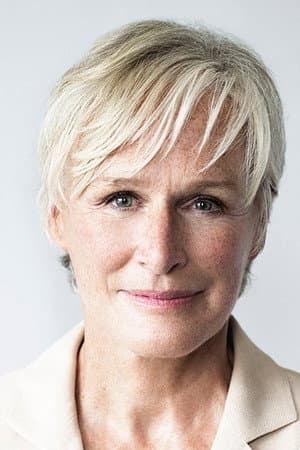
Hollywood loves nothing quite so much as a coronation, and this week it handed out two of the sweetest ones it has in its arsenal. Glenn Close and Ridley Scott have been named honorary Oscar recipients, a tribute that puts a bow on careers that have collectively spent nearly a century bending the movies to their will. The Academy confirmed the honors as part of its annual celebration ofachievement that, for one reason or another, the competitive races never quite got around to rewarding.
If you've spent the last forty-odd years watching Close get nominated for basically everything and win almost none of it, this one lands like a standing ovation from the entire industry at once. The woman has racked up more acting nominations than any performer in Academy history without a competitive statue to show for it, and the honorary award finally rights a wrong that Oscar watchers have been grumbling about for decades.
Glenn Close: The Queen of Almost
There's a certain dark comedy to Close's Oscar history. Eight competitive nominations. Zero wins. She's been in the conversation so many times that "Glenn Close is overdue" has practically become an annual Academy Awards tradition, right up there with the In Memoriam montage and somebody's dress going viral on social media.
What makes the honorary Oscar feel so right is the sheer range of what she's done. Close has gone toe-to-toe with Michael Douglas in "Fatal Attraction" and made one of cinema's great villains out of pure desperation. She's done the buttoned-up aristocratic menace thing in "Dangerous Liaisons." She's played the loyal, devastated wife in "The Big Chill" and made grief look effortless. There's the gender-bending turn in "Albert Nobbs," a project she shepherded for years out of sheer stubborn devotion. And anyone who caught her scene-stealing work in "The Wife" - the performance that arguably should have been the one - knows she's been operating at the very top of her game well past the point where most actors start picking up lifetime-achievement hardware.
Add in the fact that she's one of the few performers equally at home on Broadway and on prestige television, and you've got a career that's been less a career and more a résumé of excellence sprinkled across every medium she's touched. The honorary Oscar is the industry's way of saying what her fans have been shouting for years: she deserved one of these a long time ago.
Ridley Scott: The Man Who Built Worlds
Close's co-honoree is no slouch either. Ridley Scott has spent the better part of five decades making films that look like they cost slightly more than a small country and feel twice as grand. The man essentially invented modern science fiction cinema with "Alien" and then outdid himself with the rain-soaked, neon-drenched future of "Blade Runner." He took the historical epic on a long, bloody stroll through "Gladiator." He's made war movies, crime sagas, sweeping historical dramas, and whatever moody, ambitious thing strikes his fancy next.
Scott's filmography is one of those rare bodies of work where even the misfires are interesting. He's never been one to play it safe, and he's never stopped working - which is perhaps the most remarkable part of the whole thing. While plenty of directors his age have long since settled into retrospectives, Scott has kept his foot on the gas and his eye on the next massive production. That relentless pace has earned him a reputation as one of the industry's great craftsmen and, apparently, a spot alongside Close at the Academy's grown-ups' table.
An Honor Worth Celebrating
An honorary Oscar is both a thank-you and a gentle nudge: the industry acknowledging that some people simply made the movies what they are. Close and Scott fit that description about as neatly as any two names could. One is a performer who defined what a great screen actor can be across five decades. The other is a director whose films permanently rearranged what audiences expect from spectacle and suspense.
Watching the two of them accept the praise together is the kind of evening Hollywood relishes. There will be montages. There will be standing ovations. There will almost certainly be at least one speech that runs a little long, and honestly, nobody in that room will mind. These are two people who have earned the right to go over time.
For viewers, it's a chance to appreciate the kind of durable, risk-taking work that rarely gets a clean through-line to the podium. Close might have missed out on the competitive trophy, but the honorary Oscar carries its own weight - it's not about a single year, it's about all of them. And Ridley Scott has been collecting years in the business like they were props on a soundstage. Consider this the Academy finally clearing its throat and saying thank you. About time.
Source: Reuters