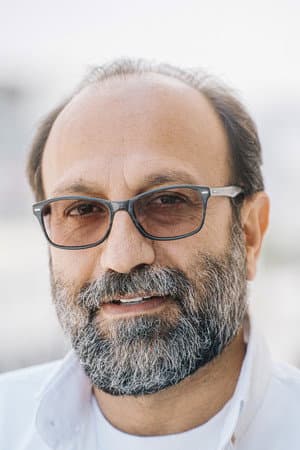
Asghar Farhadi has never been one to let a Hollywood narrative slide by unchallenged, and this week he took direct aim at one of the most celebrated American films of the past decade. The two-time Oscar-winning Iranian filmmaker argued that movies like Argo - Ben Affleck's 2012 thriller about a CIA operation to smuggle Americans out of Tehran - help keep alive a stubborn and self-flattering idea in American cinema: that the United States is the world's designated rescuer, and that everyone else is simply waiting to be saved.
His blunt question to that tradition: "Who asked you to come and save us?"
Farhadi's remarks land in the middle of an ongoing cultural conversation about whose stories get told, and by whom - a debate that has only intensified as Hollywood keeps returning to real-world geopolitical events and refashioning them into crowd-pleasing dramas.
The White Savior Lens, Revisited
The white savior trope is hardly a new target for critics. For years, scholars and commentators have pointed out how often Hollywood frames stories of foreign conflict, poverty or crisis through the eyes of a Western protagonist who swoops in to fix things. The pattern shows up across genres, from war films to feel-good dramas set in the developing world.
What gives Farhadi's critique extra weight is his vantage point. He's spent his career making tense, morally complex films about ordinary Iranians navigating impossible choices - stories that don't require a foreign hero to arrive and impose order. In his view, productions like Argo flatten a country and its people into a backdrop for an American triumph, turning a real political crisis into a vehicle for U.S. heroism.
That's the heart of his objection. It isn't just that these films get details wrong, or that they simplify history - it's that they center the wrong person entirely. When the emergency ends and the credits roll, the people who actually lived through it are reduced to scenery.
Why This Argument Keeps Coming Back
This isn't the first time Argo has drawn fire for its treatment of the hostage crisis. The film was widely praised in the U.S. - it took home the Best Picture Oscar - but in Iran it was criticized for distorting events and minimizing Iranian perspectives. Farhadi's latest comments revive that dispute with a sharper cultural edge.
There's also a larger industry story here. American studios have long gravitated toward international settings because they offer drama, stakes and a built-in sense of urgency. The trouble is that the camera almost always stays on the outsider. Audiences get the rescue; they rarely get the people being rescued, in their own voice.
For Farhadi, the fix isn't complicated. Let the people at the center of these stories tell them. That's not a political statement so much as a storytelling one - and it's the same instinct that has defined his own filmography.
The Bigger Picture
His timing is notable. As streamers and studios churn out more globe-spanning content than ever, questions about authenticity and point of view have become central to how critics and audiences judge a project. A movie can be technically flawless and still feel hollow if it treats an entire nation as set dressing.
Farhadi isn't arguing that American filmmakers should stop making movies about the world. He's questioning the reflex - the assumption that a U.S. protagonist is the natural center of gravity in someone else's story. That reflex is what he's calling out, and it's a critique that's hard to wave away when you consider how few of these films ever bother to ask what the locals wanted.
Whether Hollywood listens is another matter. The industry has a long history of absorbing criticism while changing very little. But the conversation keeps resurfacing, and every time a filmmaker of Farhadi's stature speaks up, it gets a little harder for studios to pretend the question was never asked.
His point, stripped of any diplomatic cushioning, is simple: not every story needs a savior. Sometimes it just needs someone willing to listen - and a camera pointed in the right direction.
It's a sharp reminder that the most powerful thing a film can do isn't rescue anyone. It's to let people speak for themselves, on their own terms, without a foreign hand reaching in to rewrite the ending. Farhadi has been doing exactly that for years, and he's clearly not done making noise about it.
Source: Variety