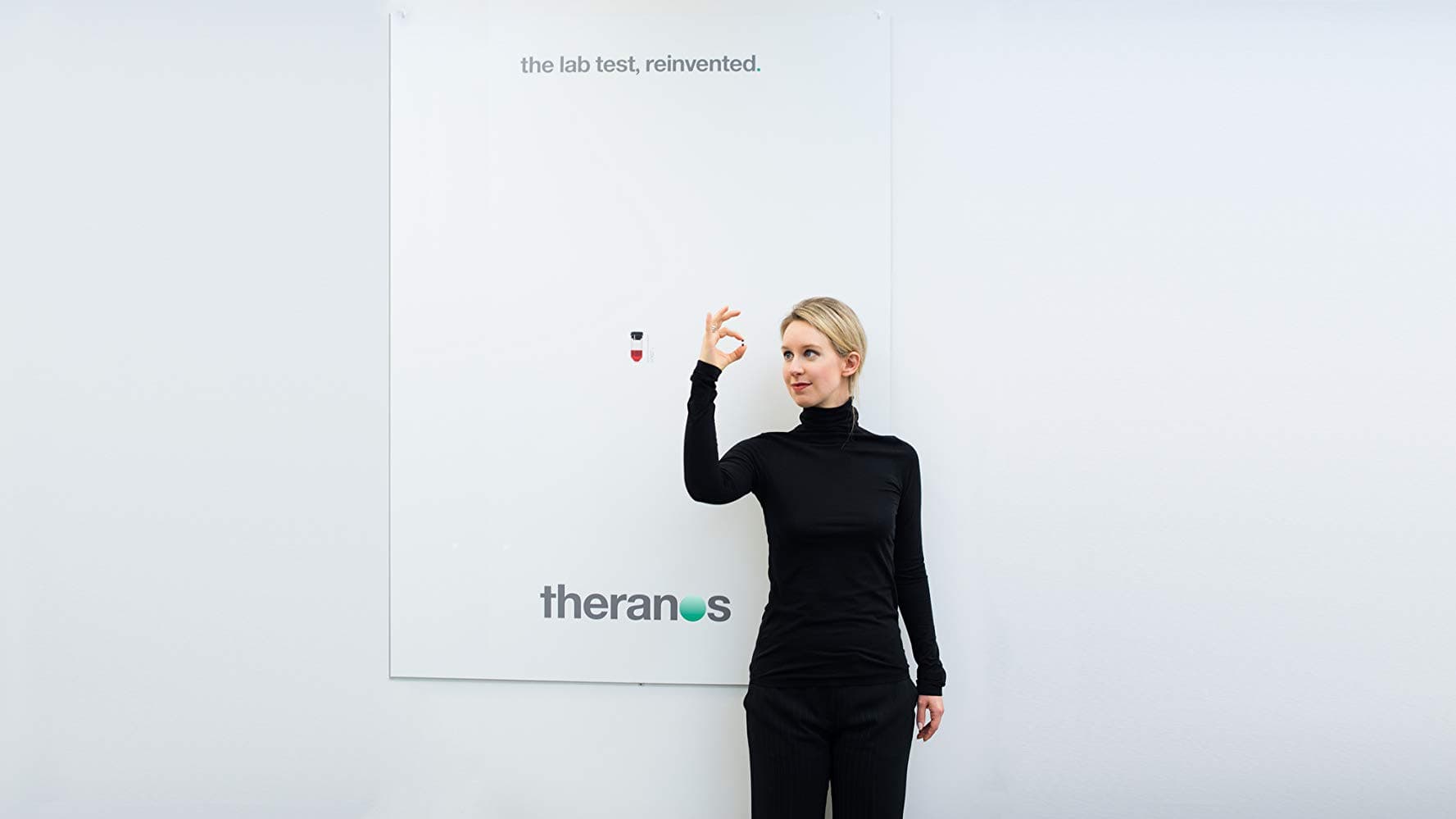
The Motion Picture Association has handed down its verdict, and it's not the one Elizabeth Holmes was hoping for. A new documentary about the disgraced Theranos founder has officially been slapped with an R-rating, and the reason cited by the ratings board is raising more than a few eyebrows: "graphic nudity."
Yes, you read that right. The woman who built a billion-dollar house of cards on a blood-testing technology that never worked is now the subject of a film that carries the same rating typically reserved for raunchy comedies and hard-R thrillers. It's a collision of Silicon Valley scandal and Hollywood censorship that nobody saw coming - which, given Holmes's track record, feels oddly on-brand.
Wait, What Exactly Is in This Documentary?
That's the question everyone's asking, and the answer is decidedly less titillating than the rating implies. According to those familiar with the film, the "graphic nudity" designation stems from a sequence involving Holmesspecifically, footage and imagery connected to her personal life and the media circus that surrounded her trial. The documentary doesn't shy away from the more intimate details of her story, and apparently, neither does the ratings board.
It's worth noting that an R-rating for a documentary is relatively rare. Most non-fiction films skate by with a PG-13 or even a PG, largely because they're built on interviews and archival footage rather than dramatized content. When a doc lands an R, it usually means the material is either graphically violent, profanity-laced, or, as in this case, sexually explicit in a way the board deems unsuitable for younger viewers. Holmes's saga, it turns out, checks at least one of those boxes in a way that surprised even seasoned industry observers.
The Irony Is Thick Enough to Cut
Here's where it gets deliciously meta. Holmes spent years cultivating a public image of buttoned-up, black-turtleneck-wearing seriousness. She was the wunderkind who promised to revolutionize healthcare, the Stanford dropout who convinced investors, journalists, and even former statesmen to hand over hundreds of millions of dollars. Her carefully curated persona was all about discipline, control, and, above all, privacy.
Now, a documentary bearing her name is being marketed, at least in part, on the promise of nudity. The whiplash is almost cinematic in its own right.
For a generation raised on true-crime content and celebrity downfall narratives, Holmes has become something of a pop-culture fixture. Between the podcast "The Dropout," the Emmy-winning Hulu series of the same name starring Amanda Seyfried, and the sheer volume of memes dedicated to her unnervingly steady gaze, she's less a corporate villain and more a permanent resident of the cultural zeitgeist. Adding an R-rating to the mix only deepens that strange, uncomfortable fascination.
What This Means for the Film's Release
An R-rating isn't a death sentence - far from it. In fact, for a documentary aiming to stand out in a crowded streaming landscape, the controversy could be a feature, not a bug. Audiences are notoriously curious about content that's been labeled "too mature" for general consumption, and the promise of something scandalous has a way of driving clicks, streams, and ticket sales.
That said, the rating does limit where the film can be screened and who can buy a ticket. Theatrical distributors will have to enforce age restrictions, and promotional materials will need to carry the familiar red-band branding. For a project that might have otherwise flown under the radar as another entry in the ever-expanding Theranos content universe, the R-rating gives it a sharper edge and a clearer identity.
It also raises a broader question about how we consume stories of real-life wrongdoing. Holmes was convicted on federal fraud charges and sentenced to more than a decade behind bars. There are actual victims - patients who received inaccurate test results, investors who lost their savings, employees who believed in a mission that turned out to be fiction. Does an R-rated, nudity-adjacent documentary honor that story, or does it turn tragedy into spectacle?
The Bottom Line
Whether the "graphic nudity" classification is genuinely warranted or simply the ratings board being characteristically cautious, one thing is clear: this documentary just became a lot harder to ignore. Holmes's story has already been told through books, podcasts, scripted television, and countless think pieces. Now it's getting the big-screen, adults-only treatment.
Love her, loathe her, or just can't look away from the train wreck, it seems the Elizabeth Holmes industrial complex isn't slowing down anytime soon. And if the ratings controversy is any indication, this latest chapter is going to be every bit as uncomfortable and compelling as the woman herself.
Source: hollywoodreporter.com