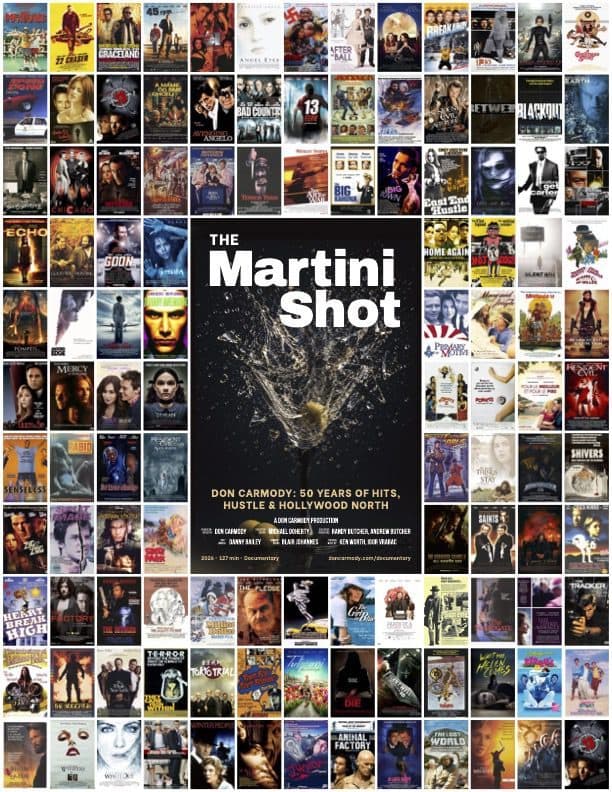
The man who turned Toronto into a stand-in for every city in America - and made a fortune doing it - has taken his last walk off the soundstage. The Canadian film producer and director known affectionately across the industry as "the Don of Hollywood North" has died, closing the book on a career that helped transform a sleepy provincial film scene into one of the busiest production hubs on the planet.
You may not know his name, but you've almost certainly watched his work. If you've ever seen a Toronto street dressed up as New York, Chicago, or a vaguely European capital in a mid-budget thriller, there's a decent chance he had a hand in it. That was his specialty: making the familiar look like somewhere else, cheaply and convincingly, long before tax credits and streaming money turned the city into a permanent backlot.
The accidental architect of a boomtown
His story is a classic Canadian one - modest beginnings, a knack for stretching a dollar, and an uncanny ability to say yes when American studios came knocking. In the 1970s and '80s, when Hollywood was looking for a way to cut costs without sacrificing production value, he was one of the first to roll out the welcome mat. He understood something the studios didn't: that a city with a diverse skyline, four distinct seasons, and a deep bench of local crew could pass for almost anywhere.
That insight built an industry. Today, Toronto is one of the top production centers in North America, hosting everything from blockbuster franchises to prestige television. But the groundwork was laid by producers like him - people who saw opportunity where others saw only a frozen tundra and a currency discount.
A reputation built on loyalty, not ledgers
What set him apart wasn't just the bottom line. By all accounts, he was fiercely loyal to the people who worked for him. Crew members who started with him in the early days stayed for decades. He knew the name of every gaffer, every driver, every craft-service worker on his sets - and he treated them like family. In an industry notorious for churning through talent, that kind of staying power was almost unheard of.
He also had a reputation for being blunt, funny, and allergic to Hollywood pretension. He didn't care about red carpets or awards-season schmoozing. He cared about getting the shot, staying on schedule, and making sure everyone got paid. That no-nonsense attitude earned him the "Don" nickname - half tribute, half joke, entirely earned.
His filmography is a mix of the forgettable and the surprisingly enduring. He produced and directed a string of genre pictures - action, thrillers, the occasional horror flick - that found second lives on cable and, later, streaming. Critics rarely loved them, but audiences kept watching. And more importantly, they kept working. For a generation of Canadian filmmakers and technicians, his sets were the first real job, the first credit, the first step toward a career.
The legacy is everywhere
You can trace his influence through the industry today. The production-service model he helped pioneer - where a foreign studio rents local crew, equipment, and locations - is now the backbone of film economies from Atlanta to Sydney to Budapest. He didn't invent it, but he was one of its earliest and most persistent evangelists.
He was also, quietly, a mentor. Dozens of producers, directors, and department heads got their start under his wing. Many of them went on to bigger things, and many of them still credit him for teaching them how to run a set without losing their minds - or their humanity.
The Don never chased fame. He chased work. And in doing so, he built something more lasting than a single hit movie: an ecosystem. A place where stories could be told, crews could feed their families, and a city could become a chameleon.
Hollywood North exists because people like him refused to wait for permission. They just started shooting. And now, with his final bow, the lights dim on one of the guys who turned them on in the first place.
He is survived by his family, his crew, and an entire industry that owes him a debt it can never fully repay - though a few extra shooting days wouldn't hurt.
Source: The Hollywood Reporter