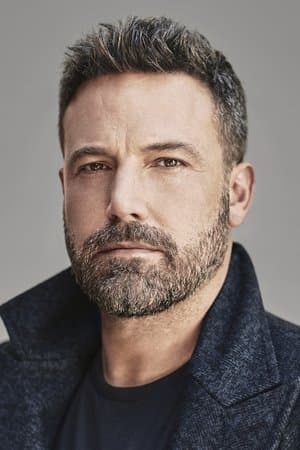
Ben Affleck wants you to know he's not anti-AI. He's just anti-lazy.
The actor and director, who has spent the better part of three decades watching Hollywood wrestle with one existential threat after another, is now wading into the industry's latest panic: artificial intelligence. And in typically blunt Ben Affleck fashion, he's not here to deliver a doom-and-gloom sermon or a Silicon Valley sales pitch. He's here to talk about doing the thing right.
Affleck has been making the rounds discussing how he approaches AI on his latest project, and his stance lands somewhere in the messy middle - a place most working filmmakers actually inhabit, even if the loudest voices on either side of the debate rarely acknowledge it. His position boils down to a simple idea: the technology itself isn't the villain. It's how you use it, and more importantly, whether you're using it to replace people or to help them.
The Human Beings Come First
For Affleck, the ethical line gets drawn at human labor. His argument, as he's laid it out, is that AI becomes a problem the moment it's deployed to cut people out of the equation - to avoid paying writers, actors, crew members, or anyone else whose hands and brains actually make a movie exist. That's not an abstract concern. The entertainment industry spent much of the past few years locked in bitter labor battles precisely over this question, with writers and actors walking picket lines to demand guardrails around how their work and likenesses could be used by machines.
Affleck's take fits into that conversation without dodging it. He's acknowledged the technology is here whether anyone likes it or not, and that pretending otherwise is a losing game. But he's also made it clear that "here" doesn't have to mean "in charge." Used as a tool - to speed up tedious processes, to iterate on ideas, to handle the kind of grunt work nobody went to film school for - AI can be something closer to a helpful crew member than a replacement for one.
A Career Built on Reinvention
There's a certain irony in Affleck being the guy delivering this message. This is, after all, a man whose career has survived more reinventions than most actors get in a lifetime. He went from Oscar-winning wunderkind, to tabloid punchline, to blockbuster-leading man, to respected director, to - most recently - the guy who quietly turned in some of the most interesting work of his life. If anyone understands that the industry changes whether you're ready or not, it's him.
That perspective seems to inform how he talks about AI. He's not treating it like an alien invasion. He's treating it like every other tectonic shift that's hit Hollywood - sound, color, digital cameras, streaming. Each one arrived with predictions of apocalypse. Each one reshaped the business. The people who thrived were the ones who figured out how to use the new tools without surrendering their craft to them.
What "Ethical" Actually Means Here
The word "ethical" gets thrown around a lot in AI discussions, usually without much definition. Affleck's version seems to come down to a few practical questions. Does this application put real people out of work? Does it take something without consent or compensation? Does it cut corners in a way that shows up on screen?
If the answer is no across the board, then - in his view - there's room to experiment. That's a more pragmatic stance than the absolutist takes that tend to dominate the discourse. It also happens to be the position a lot of working artists quietly hold but rarely say out loud, because saying it risks getting flamed by both sides.
The Larger Conversation
Affleck isn't the first filmmaker to weigh in on AI, and he won't be the last. The debate has been simmering across the industry for a while now, with everyone from studio executives to indie directors offering their two cents. What makes Affleck's perspective notable is that he's neither a tech evangelist nor a reflexive skeptic. He's a guy who's been in the trenches and seems mostly interested in making sure the trenches stay staffed with actual humans.
Whether his approach becomes a model others follow, or just one more voice in an increasingly crowded argument, remains to be seen. But for an industry still figuring out where the line between tool and threat actually sits, hearing from someone who's navigated a few upheavals already can't hurt.
And hey - if the machines ever do take over Hollywood, at least we'll have plenty of footage of Ben Affleck looking tired and explaining why that was a bad idea.
Source: The Hollywood Reporter