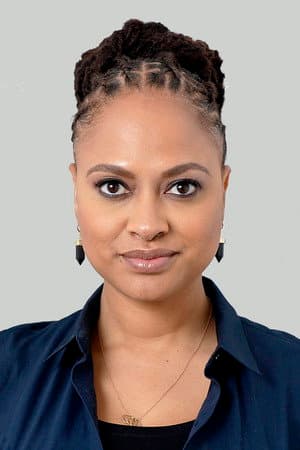
Ava DuVernay has never been one to mince words, and her latest comments are landing like a thunderclap across an industry that's already bracing for stormy weather. During a recent appearance, the acclaimed filmmaker behind "Selma," "13th," and "Origin" opened up about her relationship with her own work - and dropped a blunt assessment of the business she's spent two decades navigating. Her message, boiled down: one of her projects quite literally kept her alive, and the Hollywood she came up in? That version is finished.
The project in question is "14th," the latest chapter in DuVernay's ongoing exploration of race, justice, and American history. According to the director, the film wasn't just another entry on her filmography - it was a lifeline. She described the making of it as something that pulled her through a personal and creative low point, framing the work as a source of purpose when much else felt uncertain. For a filmmaker who has spent her career interrogating systems of power, it's a striking admission: sometimes the story you tell is the one that saves you.
A Director Who's Always Been Ahead of the Curve
None of this should surprise anyone who's followed DuVernay's trajectory. She became the first Black woman to win the directing award at Sundance for "Middle of Nowhere," then went on to helm "Selma," a film that earned widespread acclaim and cemented her as one of the most vital political filmmakers of her generation. With "13th," her Oscar-nominated documentary, she traced the throughline from slavery to mass incarceration with a clarity that made the film required viewing far beyond cinephile circles. "Origin," her adaptation of Isabel Wilkerson's caste framework, continued that thread, pushing audiences to reconsider how they categorize oppression across cultures and centuries.
So when DuVernay says a project "saved" her, it carries weight. This isn't a director prone to hyperbole for headlines. Her body of work is a study in using cinema as both mirror and megaphone - and "14th" appears to sit right at the intersection of the personal and the political, the kind of project that demands everything from its maker.
"Hollywood Is Over" - And She's Not Exactly Mourning
The second half of DuVernay's declaration is the part that's going to fuel a thousand think pieces. "Hollywood is over," she said - a statement that, depending on where you sit, reads as either a doomsday prophecy or a long-overdue obituary.
Consider the evidence. The traditional studio system has been squeezed from every direction: streaming economics that never quite delivered on their promises, production slowdowns, labor battles that exposed how fragile the whole apparatus really is, and an audience that has quietly drifted toward YouTube, TikTok, and whatever else grabs attention in fifteen-second increments. The mid-budget drama - the kind of film that once launched careers like DuVernay's - has become an endangered species. Meanwhile, the theatrical experience keeps getting repositioned as a luxury event rather than a habit.
For a filmmaker whose work has always been rooted in challenging mainstream narratives, watching that mainstream contract might not feel like a tragedy. It might feel like an opening. If the old gatekeepers are losing their grip, the question becomes: who picks up the pieces, and what do they build with them?
DuVernay's comments echo a growing chorus of artists who've concluded that the industry's center of gravity no longer sits in the places it once did. Independent financing, direct-to-audience models, international co-productions, and regional film hubs have all been quietly gaining ground while the legacy studios try to figure out what they even are anymore. Calling Hollywood "over" isn't just cynicism - it's an acknowledgment that the machine has changed shape, and the people who once depended on it are adapting accordingly.
What This Means for the Next Generation
There's a generational subtext here that's hard to miss. DuVernay belongs to a wave of directors who fought their way into a system that wasn't built for them, then used that access to tell stories the system had long ignored. If she's now saying that system is finished, the implication is that the fight itself has moved. The next wave of filmmakers may never need to knock on Hollywood's door at all - and maybe, in DuVernay's view, that's not a loss but a liberation.
Her own path has already proved the point: she built momentum through independent work, challenged distribution norms, and leveraged every platform available to get stories in front of people. If "14th" saved her, it's because the work itself - not the industry's validation - remains the thing that matters. That's a lesson worth more than any studio greenlight.
Whether Hollywood is truly over or just undergoing another messy reinvention, one thing is clear: Ava DuVernay isn't waiting around to find out. She's already moved on to whatever comes next. And given her track record, it's probably worth watching.
Source: The Hollywood Reporter