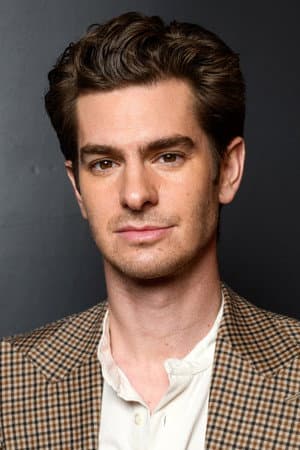
Andrew Garfield has played a Spider-Man, a Jesuit priest, a disgraced televangelist, and a man who counts for a living. Now, according to early buzz, he's taking on the role of a lifetime: the guy who briefly got fired from his own company and then came back like nothing happened. "Artificial," the newly surfaced drama that casts Garfield as a fictionalized stand-in for OpenAI chief Sam Altman, is the kind of ripped-from-the-headlines project that feels less like a movie and more like a group chat you can't escape. And somehow, it works.
The premise alone is catnip for anyone who has spent the last few years doomscrolling through AI headlines. We're talking boardroom coups, midnight Slack messages, messianic tech founders, and a nonprofit board that tried to fire its most famous employee over a long weekend. Garfield, an actor who specializes in playing men with too much conviction and not enough sleep, is an inspired piece of casting. He's got the smile that says "I'm just a guy" and the eyes that say "I've already mapped out the next decade."
Garfield's Altman Is a Charmer, Not a Villain
The smartest thing "Artificial" does is refuse to turn its central figure into a mustache-twirling tech bro. Garfield plays him as disarmingly calm, the kind of person who makes you feel like you're the only person in the room until you realize the room has been carefully curated. It's a performance built on restraint rather than tics. There's no hoodie-and-hooded-eyes caricature here, just a guy who listens so intently you forget he's also selling you something.
Watching him work a room is genuinely gripping. He pivots from earnest to evasive in a single breath. He apologizes in a way that somehow makes you feel bad for him. He talks about humanity's future with the wide-eyed sincerity of a man who has never once doubted himself. It's funny until it isn't, and the movie knows exactly when to flip that switch.
The Story That Won't Stop Rewriting Itself
Here's the thing about making a movie about the AI industry: the source material keeps updating. Whatever version of events inspired this script has already been outpaced by approximately four hundred new developments, a handful of lawsuits, and at least one open letter. "Artificial" doesn't pretend to be a documentary. It's a dramatization that grabs the broad strokes - the idealism, the paranoia, the sudden scramble for control - and filters them through a fictional lens.
That's both its strength and its limitation. Audiences who follow tech news will recognize the beats: the rushed firing, the employee revolt, the triumphant return. But the film is less interested in who did what to whom than in the strange psychology of a movement that started with "let's save the world" and ended with "please sign this non-disparagement agreement." It's a story about how quickly a mission becomes a brand.
Why It Lands Now
The timing is almost too on the nose. We're living in an era where AI is simultaneously writing our emails, diagnosing our illnesses, and threatening our jobs, and the people building it are treated like either prophets or supervillains depending on the week. "Artificial" captures that whiplash. It doesn't offer easy answers, and it doesn't pretend the people in the room have them either.
What it does offer is Garfield at the top of his game, doing that thing where he makes ambition look almost noble right up until it doesn't. He's an actor who can sell both the vision and the vanity, and the script gives him room to do both. If the movie has a thesis, it's probably this: the scariest thing about the future isn't the technology. It's how charming the people building it can be.
Whether "Artificial" ends up as a cautionary tale, a hagiography, or something messier in between, it's already doing what the best ripped-from-the-headlines dramas do - making you lean forward and wonder how much of this actually happened. The answer, unsettlingly, is probably "enough."
Source: The Hollywood Reporter