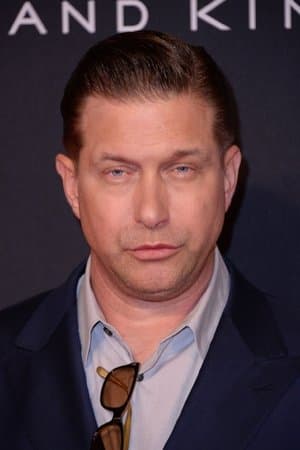
Stephen Baldwin: Why I Quit Hollywood, Not Tom Cruise
Stephen Baldwin opens up on leaving fame behind, revealing he never wanted a Tom Cruise-style life. His surprising reasons inside.
Stephen Baldwin has spent years fielding the same question - why did a guy who rode the wave of The Usual Suspects and a string of '90s hits just… walk away? Now, he’s finally answering it, and the reason is a lot less about burnout and a lot more about the man in the mirror. Or, more precisely, the man on the poster for Top Gun.
In a frank new interview, Baldwin revealed that his decision to step back from the Hollywood machine wasn't about a lack of offers or a scandal forcing him out. It was a deliberate choice, rooted in watching the industry's biggest stars and deciding that the price of that particular throne wasn't one he was willing to pay. His blunt phrasing? "I didn't want to be Tom Cruise."
Now, let's be clear - this isn't a diss on Cruise's filmography. The guy has essentially defined the modern blockbuster. But for Baldwin, the comparison was never about movie roles or box office receipts. It was about the all-consuming nature of the gig. He looked at the level of fame, the relentless schedule, the sheer gravitational pull that a top-tier movie star has to exert just to stay on top, and he saw a trap. He wanted a life, not a brand.
That's a huge statement from someone who was, for a hot minute in the mid-'90s, on that exact trajectory. Remember, this is the guy who held his own in The Usual Suspects alongside Kevin Spacey, Gabriel Byrne, and Benicio del Toro. He was the young, edgy Baldwin, the one with the chaotic energy that fit perfectly into indie darlings and studio thrillers alike. He had the look, the timing, and the name recognition that comes with being part of one of Hollywood's most famous acting dynasties. The pipeline to "A-list" was right there, paved and waiting.
So, what changed? Baldwin's explanation suggests it wasn't a single moment of crisis, but a slow, creeping realization. He saw the kind of life that was being sold to him - the one that comes with nonstop press tours, a publicist attached to your hip, and a bar where your private life becomes public property. He looked at the top of the mountain and saw a whole lot of empty, lonely space. He realized that to be that famous, you have to sacrifice almost everything else. And he wasn't willing to gamble his family or his sanity on that bet.
It's a fascinating counter-narrative to the standard Hollywood story. We're so used to hearing about actors who would kill for a fraction of that fame, who claw their way up the ladder for a shot at the leading-man role. Here, you have a guy who essentially looked at the prize and said, "No thanks, I'll take a different one." He chose a quieter path, one that has seen him pivot towards faith-based films and reality TV appearances, much to the bemusement of his famous brothers, rather than chasing the $20-million-dollar paydays that could have been his.
There's a certain poignancy to it all. In an era where we're constantly debating the mental health toll of celebrity, Baldwin's confession feels almost prescient. He saw the burnout coming before it was a talking point. He saw the way the industry chews people up and spits them out, and he decided to step off the treadmill before it started running too fast. He's not bitter about it, either. He seems at peace with the trade-off, understanding that while he might not have his name above a major studio tentpole, he gets to have something arguably more valuable: autonomy.
Of course, it's hard to hear that quote and not wonder about the "what ifs." What if he'd stuck with it? Would he be headlining action franchises right now? But that's the thing about Baldwin's revelation - it reframes the entire narrative. It's not a story of a career that failed; it's a story of a man who actively avoided one. He didn't want the jet-setting, the Scientology-level dedication to craft, or the almost superhuman discipline that someone like Cruise embodies. He wanted to be a working actor with a life outside the frame. And in a town built on relentless ambition, that might be the most rebellious move of all.
Source: Page Six