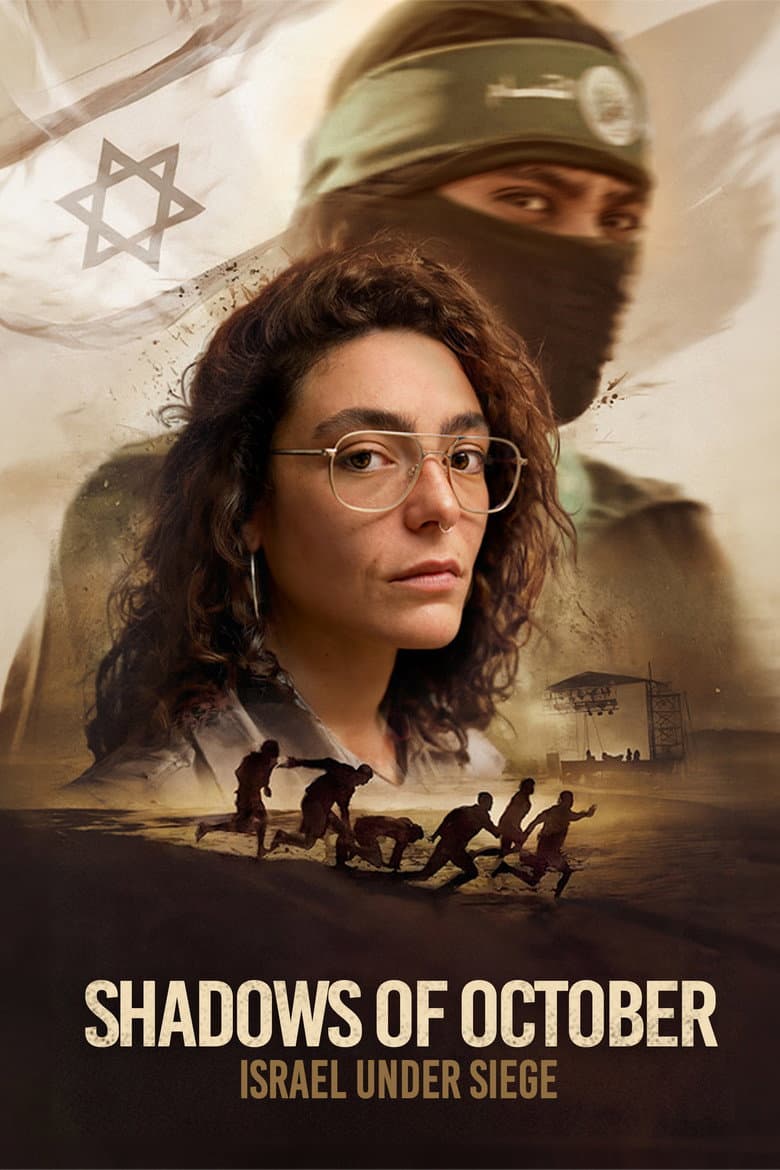
Shadows of October: Israel Under Siege (2026) Preview
Beau Lee's gripping 2026 thriller reimagines a nation's darkest hour. Dive into our spoiler-free preview of the tension, drama, and survival.
Photo: TMDb
Well, here’s a date that’s going to hit like a ton of bricks. August 21, 2026. It’s not just another Friday at the multiplex. It marks the release of Shadows of October: Israel Under Siege, the new documentary feature from director Beau Lee that isn’t just rehashing news clips. This one is asking the big, uncomfortable questions - the kind you usually ponder at 3 a.m. or in a philosophy seminar, not in a movie theater with a bucket of popcorn on your lap.
Right off the bat, let’s clear the air: this isn't a slickly produced action thriller with car chases and one-liners. The film takes on the raw, jagged reality of the October 7, 2023 attacks, and it doesn't flinch. With a runtime of 113 minutes (a proper, deep-dive length), Shadows of October aims to be a definitive historical document. And given the subject matter, that's no small claim.
Release Date & Where to Watch
You can catch it starting today, August 21, 2026. The release strategy appears to be the classic "prestige documentary" route - the kind of rollout that starts in select cities and expands based on word-of-mouth. You’ll want to check your local indie arthouse, Landmark theater, or big-city AMC/Dolby Cinema listings. It’s a cinematic experience that demands attention, so I’d skip the drive-in for this one. As for streaming, no word yet on a digital drop, but films like this usually make their way to major platforms (think Netflix or Apple TV+) after a theatrical window. If you're like me and prefer to watch docs with a pause button, you might have to patient.
Cast & Crew
Director Beau Lee steps behind the camera with a clear-eyed approach. The film isn’t just a montage; it’s a structured argument built on testimony. The "cast" here is a who's who of voices that lived it and those who analyze it. You have Noam Ben David, Shalev Biton, and Doron J Keidar, all as themselves - survivors and witnesses whose personal accounts anchor the film in gut-wrenching reality. You’ve also got Anna Beth and Raz Tahan contributing perspectives, while Itamar Marcus brings his expertise. Notably, the film includes Saleem Shalash as Self - an inclusion that suggests we’re getting an uncommonly nuanced perspective in a landscape often painted only in black and white.
The anchoring voice is Levi Hazen, who serves as the presenter. He’s effectively our guide through the wreckage, asking the questions that the rest of us are too afraid to voice out loud. It's a smart move to have a single narrator who can bridge the gap between the historical record and the spiritual crisis at the film's heart.
Story & What to Expect
Here’s where the film separates itself from a standard news special. The logline isn’t just "what happened" but "Where was God?" and "Why is antisemitism rising?"
The film functions on three distinct tracks. Track one is the visceral survivor testimony - the kind of first-hand recollections that make you forget to breathe. Track two is the geopolitical and historical analysis, connecting the dots between the attack and the wave of global antisemitism that followed. But track three is the spiritual thread, and that’s the daring part. Shadows of October doesn't pretend to have easy answers; it presents the question of divine presence in unspeakable suffering directly to the audience and lets the talking heads wrestle with it.
Expect a heavy cinematic approach - think interviews against dark, contemplative backdrops interspersed with archival footage that is likely to be difficult to watch. This isn't a Friday-night date movie; it's a Tuesday-night "grapple with your own beliefs" movie. It’s a war documentary, yes, but it’s also a history lesson and a philosophical dialogue rolled into one. The film's title itself - Shadows - is evocative; it’s about the absence of light as much as the attempts to find it again. Don’t expect a narrative arc with a triumphant ending. Expect a thoughtful, somber investigation that leaves you with more questions than answers.
Why It's Worth Watching
In an age of bite-sized information and 60-second news updates, a documentary that spends nearly two hours sitting with trauma and asking for introspection is practically a revolutionary act. We are inundated with the "what" of current events, but Shadows of October dares to tackle the "so what" and the "why."
This film matters because it refuses to see October 7 as just another geopolitical flashpoint. It sees it as a rupture in the fabric of the human - and specifically Jewish - experience in the 21st century. By weaving together the personal with the global and the earthly with the spiritual, Beau Lee forces us to consider the long-term consequences. The rise in antisemitism is painted not as a coincidence but as a direct, ugly consequence of the attack and how it was received by the world.
Cinephiles should note: this is a documentary that uses silence effectively. The editing is reportedly tight, and the pacing allows moments to breathe - a rarity in modern filmmaking. Whether you agree with its theological bent or not, the film’s commitment to bearing witness is undeniable. It gives a face and a name to a tragedy that often gets lost in statistics.
History is happening right now, and Shadows of October: Israel Under Siege wants you to pay attention - not just to the events, but to the scar they leave on the soul. Go in with an open heart and a readiness to listen. You might not find the answers, but you’ll leave feeling the weight of the question. And that, frankly, is the point.