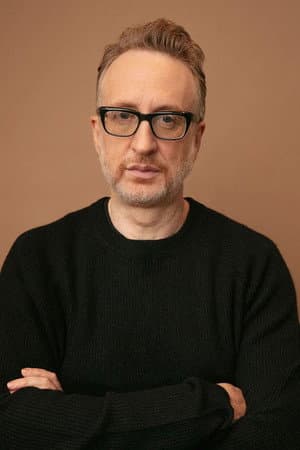
James Gray at Locarno: Actors Dictate Style
James Gray reveals at Locarno how actors shape his film style, blending cinema and dreams in this must-read director interview.
Director
James Gray
James Gray reveals at Locarno how actors shape his film style, blending cinema and dreams in this must-read director interview.
James Gray has spent his career making movies that feel like they exist somewhere between a vivid dream and a hard-edged reality - just look at Ad Astra for proof. But at this year’s Locarno Film Festival, the acclaimed director flipped the script, revealing that his cinematic approach isn’t driven by sweeping visual ambitions or meticulous storyboards. No, according to Gray, it’s the actors who call the shots, and their presence fundamentally reshapes the entire style of a film.
Speaking at the festival, where he was honored for his body of work, Gray got refreshingly candid about the collaborative chaos of filmmaking. He argued that a director can have grand plans, but once a performer steps into a role, those plans often go out the window. The way an actor moves, pauses, or even breathes can dictate camera placement, pacing, and tonal shifts in ways that no script can predict. It’s a philosophy that explains why his films, from the gritty Little Odessa to the operatic The Immigrant, feel so organically human even when they’re wrapped in genre trappings.
For Gray, the relationship between director and actor isn’t a hierarchy - it’s a feedback loop. He described how a performance can fundamentally alter a film’s visual language, nudging the cinematography toward intimacy or distance depending on what the actor brings to the table. This isn’t just theoretical musing; it’s a practical admission that the best movie moments are often accidents, born from an actor doing something unexpected and the director having the wisdom to chase it. In an era of franchise filmmaking where actors are often slotting into pre-visualized CGI worlds, Gray’s voice feels like a counter-programming manifesto.
The Locarno appearance also gave Gray a platform to wax poetic about the relationship between cinema and dreams, a topic he clearly holds close to his heart. He likened the movie theater to a shared subconscious, a place where audiences collectively process anxieties, desires, and the strange logic that governs our nights. For a filmmaker so often labeled as a classicist, the admission that his work is fundamentally dreamlike is a fascinating peek behind the curtain. He’s not trying to replicate reality; he’s trying to bottle the feeling of being awake inside a fantasy, where rules bend but emotions stay painfully sharp.
This philosophical bent isn’t new for Gray, who has always infused his narratives with a heavy dose of psychological weight. But hearing him articulate it in a live setting, away from the press junket promotion cycle, gives it a raw, almost confessional energy. He made a point to emphasize that the physicality of acting - the sweat, the stumbles, the unscripted glances - is what separates cinema from literature. Books give you thoughts; movies give you presence. And that presence, he insists, originates with the performer. The director’s job is simply to clear the runway and let them land.
The festival appearance also served as a reminder that Gray’s career trajectory has been anything but predictable. After the ambitious cosmic journey of Ad Astra with Brad Pitt, he pivoted to the intimate period drama Armageddon Time, which felt deeply personal. That back-and-forth between the infinite and the intimate is a perfect mirror of his Locarno philosophy. Whether he’s shooting a starfaring astronaut or a Queens schoolkid, the heart of the matter is always the actor’s face, not the special effects. The style, he insists, follows the human, not the other way around.
As the conversation meandered through the nature of memory, the role of the auteur, and the magic of the dark room, one thing became clear: Gray isn’t just making movies; he’s interrogating them. He spoke about cinema as a place where time collapses, where past and present blur like a half-remembered dream. It’s a powerful idea, especially at a festival like Locarno, which prides itself on championing the kind of risk-taking that Hollywood often flattens. For the audience members lucky enough to be in the room, it was likely a masterclass in thinking about film as a living, breathing art form.
The takeaway from the event is that James Gray remains one of the most thoughtful voices in modern American cinema, even if he’s never been a box-office juggernaut. His willingness to discard his own control in favor of what actors organically offer is a radical stance in a blockbuster-driven world. And his dreamlike approach to storytelling suggests that the future James Gray projects - whatever they may be - will continue to prioritize emotional authenticity over spectacle. After all, if you let the actors dictate the style, you’re bound to end up somewhere unexpected. And that, Gray would argue, is exactly where cinema should live.
Source: The Hollywood Reporter