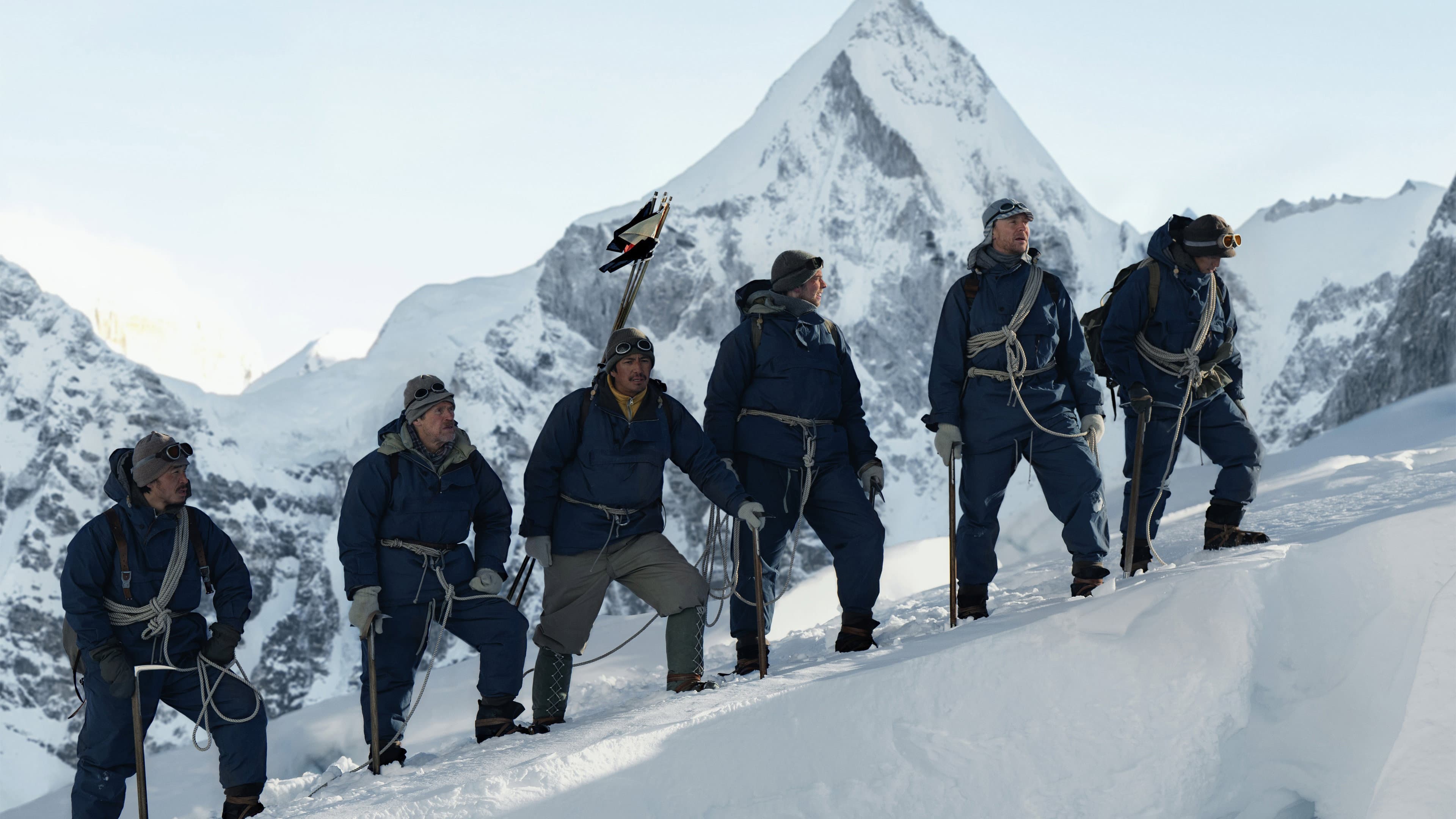
There’s a moment in every mountaineering story where the mountain stops being a backdrop and becomes a character with opinions. In Tenzing, director Jennifer Peedom builds an entire film around that moment - and around the man standing in the snow when it arrives.
The drama lands in theaters October 9, 2026, and it’s already generating serious altitude online: an 8.237 on TMDb and a 7.7 on IMDb, numbers that suggest audiences are connecting with something beyond spectacular summit footage. The premise is straightforward on paper - a determined man defies seemingly impossible odds to become the first to reach the top of Mount Everest - but the film’s real engine is the gap between who history celebrates and who history remembers.
That gap has a face here. Genden Phuntsok steps into the role of Tenzing Norgay, the Tibetan-Nepali Sherpa whose 1953 ascent alongside Edmund Hillary became one of the defining achievements of the 20th century - and one of its most complicated credit disputes. Tom Hiddleston plays Hillary, and yes, that casting is exactly as interesting as it sounds. The man best known for Loki’s smirk and a thousand Tumblr edits is playing a reserved beekeeper from New Zealand who happened to be the first to plant a flag on the roof of the world. If that doesn’t sell a ticket, nothing will.
Around them, the supporting cast reads like a film fan’s wish list. Willem Dafoe brings his trademark intensity to John Hunt, the expedition’s organizer. Johnny Flynn appears as George Mallory, whose own Everest story ended in mystery decades earlier - a shadow that hangs over every climber who follows. Lhakpa Tsamchoe plays Kinzom, while Samdrup Dorje Lama portrays a nine-year-old Tenzing, a hint that this is a life story, not just a summit story.
Peedom is a genuinely inspired choice behind the camera. She’s spent years making documentaries about the people who live and work in high places, and that sensibility shows in the film’s priorities. Yes, there is spectacle - the trailer alone has enough ice walls and howling wind to make your living room feel drafty - but the drama lives in the quiet negotiations: who carries the loads, who makes the decisions, who gets the interview afterward. Tenzing treats the climb as a team endeavor and the credit as a contested prize, which feels refreshingly honest for a Hollywood production with an English-language script.
The runtime sits at a lean 126 minutes, so this isn’t a three-hour slog through base camp politics. The film moves - early years, expedition prep, the push for the top, the aftermath - with the rhythm of a story that knows exactly which beats matter. And it never lets you forget that the man at the center of it all spent years being described as a porter before anyone thought to call him a pioneer.
Cast-wise, Phuntsok carries the emotional weight. The film gives Tenzing interiority that earlier tellings often skipped: ambition, doubt, the ache of wanting something the world keeps telling you isn’t yours to want. Hiddleston, meanwhile, plays Hillary not as a rival but as a partner with his own quiet stubbornness, and their scenes together have a lived-in, road-trip quality - two men who’ve spent so much time in each other’s orbit that silence does the work.
The timing feels deliberate. Everest documentaries come and go, but a Hollywood drama about the man behind the myth - released more than seventy years after the summit - lands as a conversation starter rather than a victory lap. Peedom knows her way around a mountain and a moral. Here she’s got both.
If the early ratings are any indication, audiences are ready to reconsider who the hero of 1953 really was. Tenzing isn’t interested in settling the debate so much as handing the microphone to the guy who’s been standing in the snow this whole time.