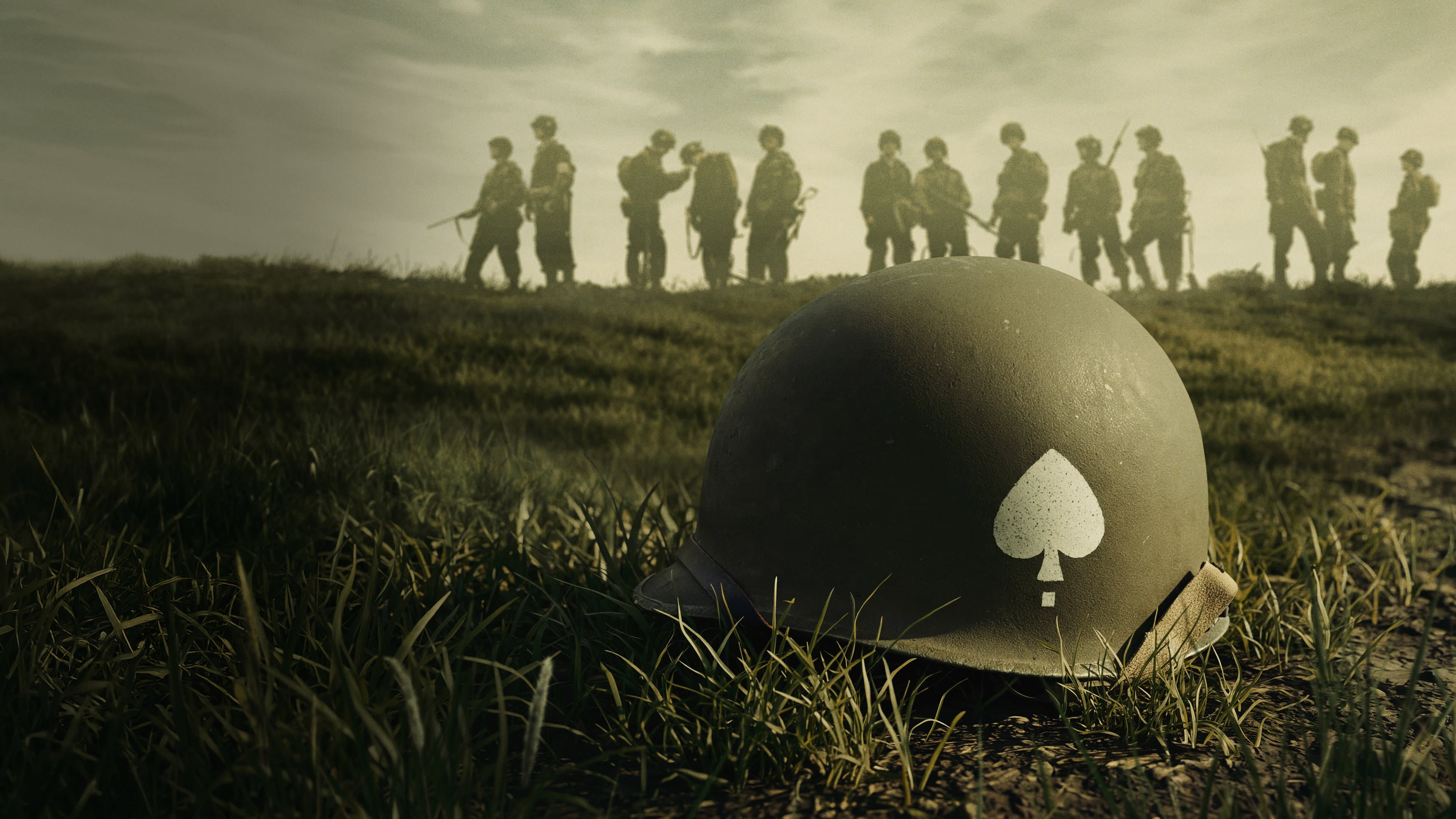
Twenty-five years after Band of Brothers first marched onto HBO and into the cultural bloodstream, the men who wore the boots are back - not to fight the war again, but to talk about what it cost them to bring it to life.
Band of Brothers: Legacy, a new hour-long documentary from director Chase Millsap, hit theaters September 9, and it's less a making-of than a reckoning. The film gathers Damian Lewis, Ron Livingston, Neal McDonough, Frank John Hughes, Michael Cudlitz, James Madio, and legendary military advisor Capt. Dale Dye for candid, often emotional reflections on what it meant to portray Easy Company - and what they learned about themselves in the process. David Schwimmer, who played the loathed Capt. Herbert Sobel, also appears. (Think about that for a second. Ross Geller's most terrifying role still might be Sobel.)
The documentary arrives with serious early numbers: a 9/10 on TMDb and an 8.5 on IMDb. For a 60-minute retrospective, those are the kind of scores that usually get reserved for the actual series.
If you know the 2001 miniseries - and if you don't, what are you doing with your streaming subscriptions? - you know it followed the paratroopers of Easy Company, 506th Parachute Infantry Regiment, 101st Airborne, from grueling training at Camp Toccoa through D-Day, the Battle of the Bulge, and the capture of Hitler's Eagle's Nest. Based on Stephen Ambrose's book and produced by Tom Hanks and Steven Spielberg, it turned relative unknowns and character actors into a brotherhood of its own.
What Legacy does so well is show how that brotherhood refuses to fade. The cast members, many of whom were in their late twenties and thirties when filming began in 2000, talk about the boot camp Dye put them through - a punishing, method-style experience that bonded them the way actual soldiers bond. Dye, a retired Marine captain who lived through Vietnam, became something between a drill instructor and a father figure. His presence in the documentary is the connective tissue between Hollywood and the real thing.
The film also leans heavily on never-before-seen archival footage and photographs of Easy Company and World War II, including material featuring the late Richard D. Winters, the company's commanding officer and the series' moral center. Winters appears here through archive footage, and the cast's reverence for him is unmistakable. Livingston, who played Lewis Nixon, and Lewis, who portrayed Winters himself, both speak about the weight of depicting men who were still alive - and, in some cases, still watching.
That's the emotional engine of Legacy: the awareness that these weren't characters. They were kids from Pennsylvania, Oregon, and everywhere in between who jumped out of planes into flak and frost.
Millsap, a veteran-turned-filmmaker, keeps the focus squarely on that responsibility. There's no flashy re-enactment, no overproduced nostalgia. Just interviews, archival material, and the sense that everyone involved understands they were temporary custodians of someone else's truth.
The timing feels deliberate too. With so few World War II veterans still with us, Band of Brothers has increasingly become a primary text - the way a lot of younger people first encounter the war. Streaming turned a nine-part miniseries into a perennial classroom tool, a father-son bonding ritual, and a gateway to reading Ambrose's book. Legacy essentially asks: what happens when the last eyewitness is gone? The answer it offers is cautiously hopeful - the story survives because people chose to honor it properly.
For fans, the behind-the-scenes stories are catnip. Expect anecdotes about freezing in the Czech woods, the brutal physical prep, and the moment certain actors realized they weren't just making a TV show. Expect also a fair amount of grown men getting misty-eyed. Bring tissues. It's that kind of documentary.
If there's a quibble, it's the runtime. Sixty minutes is barely enough. A saga this rich, with this many voices, could easily fill three hours, and some cast members get only a scene or two. But as a concentrated hit of reverence and remembrance, it lands.
Band of Brothers: Legacy isn't trying to top the original. It's trying to say thank you - to the veterans, to the actors who gave them faces, and to the audience that never stopped watching. Currahee.