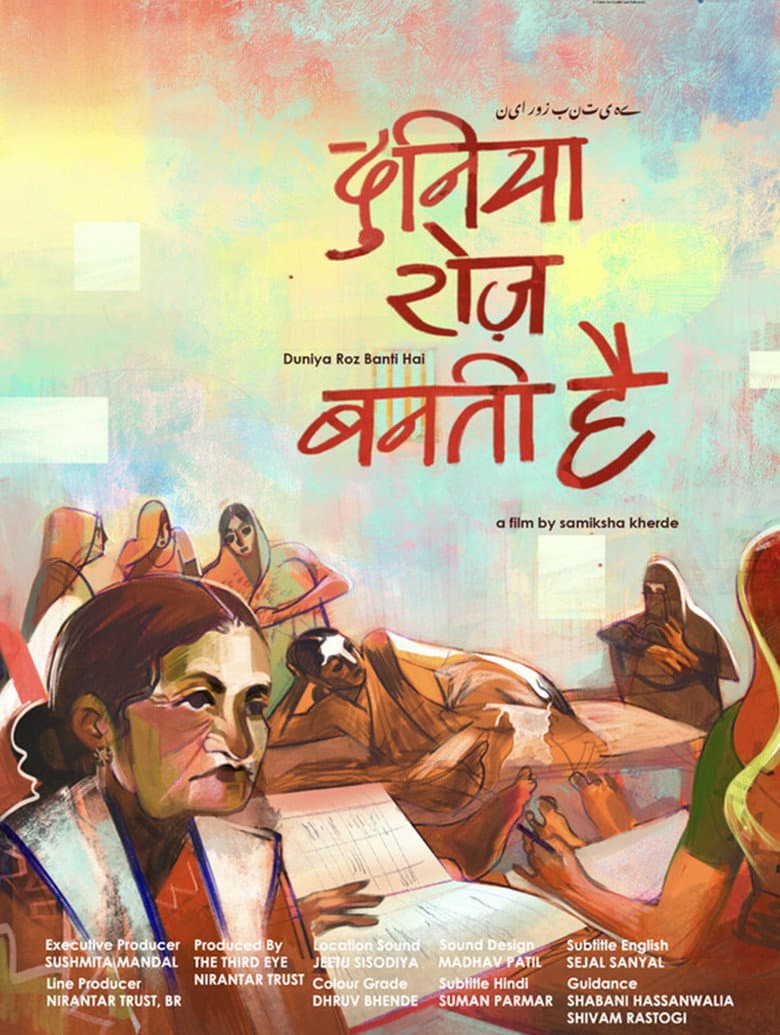
There's a particular kind of magic that happens when women get together to fix what the world keeps breaking. That's not just a feel-good sentiment - it's the actual, lived reality inside A Women's Court, a documentary that sneaks up on you and refuses to let go. If you're the kind of viewer who devours hard-hitting docs like Writing With Fire or The Cave and then immediately texts your group chat about them, this one deserves a prime spot on your radar. Clocking in at just 18 minutes, it's the rare film that understands brevity is its own kind of power.
Release Date & Where to Watch
Good news for the impatient: A Women's Court drops today, October 25, 2026. Yes, seriously - you can watch it right now. Given its short 18-minute runtime, it's tailor-made for the festival circuit and streaming platforms that champion short-form documentary work. Keep an eye on the usual suspects for this kind of release - doc-focused streaming hubs and film festival lineups tend to snap up shorts like this fast. Our advice? Don't sleep on it. Short films have a habit of showing up on a platform for a hot minute and then vanishing into the algorithm void. Bookmark it, queue it, set a reminder - whatever your chaotic system is. Just don't let it slip past you, because this one punches way above its weight class.
Cast & Crew
Here's the thing about documentaries - sometimes the most compelling characters are the people just living their lives, no script required. The cast list for A Women's Court is officially uncredited, but honestly, that almost makes it more intriguing. The women who gather in these Nari Adalats aren't actors; they're mediators, listeners, and problem-solvers who've been doing this work in rural Bihar long before any camera showed up. Their names might not be on a poster, but their presence is the entire film.
At the helm is director Samiksha Kherde, who staked out a hell of a territory for her lens. Pulling off a documentary like this takes serious patience - you can't rush women sitting in a room, working through conflicts that have no tidy endings. Kherde apparently understood that the waiting is the story. No big score, no flashy production credits needed; the craft here lives in the observation.
Story & What to Expect
So what actually happens in A Women's Court? Picture this: a group of women gather in what's called a Nari Adalat - a women's court - in rural Bihar. They're not wearing robes; there's no gavel pounding. They sit. They listen. They question. And then they mediate, sometimes in cases that are genuinely brutal. The twist? Many of these women first came to the Adalat with their own disputes, and now they've come back - not as complainants, but as helpers, ready to work things out for the next woman who walks through the door.
If you're expecting a neat courtroom drama with a verdict and a bow, adjust your expectations now. The film is upfront about the fact that what emerges isn't some fixed, tidy idea of justice. It's something shaped slowly, collectively, and - this is the key part - without clear closure. That's a bold narrative choice, and it's exactly why this documentary hits different. It respects its subjects too much to force a Hollywood ending on them. Instead, you get to sit inside the Adalat, watching women do the unglamorous, essential work of listening to each other. "Justice" here is a verb, not a noun. It's messy. It's ongoing. And at 18 minutes, the film wastes zero time getting you there.
Why It's Worth Watching
Let's be real: 18 minutes is a lunch break. You could scroll aimlessly through your feed and lose ten times that. But A Women's Court offers something your feed never will - a window into a community-built system of justice run entirely by women, in a setting where that's anything but ordinary. The film's genius is its restraint. It doesn't lecture, it doesn't sentimentalize, and it doesn't pretend to have answers. It just shows you women showing up for each other, again and again.
And look, the TMDb rating sitting at 0/10? That's not a verdict on quality - it's a fresh release that the internet hasn't caught up with yet. Consider this your chance to be early for once. Documentaries like this tend to build their audience the old-fashioned way: word of mouth, festival buzz, and viewers who won't shut up about them. Be one of those viewers. Grab 18 minutes, sit with these women, and let the ambiguity sit with you afterward. Sometimes the films without clear closure are the ones that stay open in your head the longest.